
Ever found yourself tossing and turning, struggling to shut off the day’s chatter? You’re not alone. The soothing hum of soundscapes is like that comforting lullaby many of us crave as adults. These curated sounds have taken the sleep world by storm, promising not just rest, but rejuvenation too.
Alright, so what’s a soundscape? Simply put, it’s a combination of various sounds, often emulating nature, designed to transform any space into a sleep sanctuary. Think ocean waves, gentle rain, or even the rustling leaves of a forest. These aren’t your run-of-the-mill sounds; they’re carefully crafted to create a calming atmosphere.
But why do people swear by soundscapes for a better night’s sleep? Here’s where science steps in. Research shows these sounds can significantly lower heart rates and reduce stress, making it easier for the body to slip into a deep, restorative sleep. They can also mask annoyances like traffic noise or that odd ticking clock that always seems louder at night.
Numerous studies back up the idea that these soundscapes can help folks fall asleep faster and stay asleep longer. For instance, ambiance enhanced by rhythmic nature sounds not only promotes relaxation but also triggers a kind of conditioning where your brain associates these sounds with sleep, kickstarting the production of sleep-inducing hormones like melatonin.
So, are you ready to swap out the endless scrolling on your phone for some calming soundscapes? It’s like having your personal sleep-support tool—minus the snooze button, of course.
Decoding Science: Sounds That Aid Sleep
Certain sounds have this magical way of lulling your brain to peace, paving the way to dreamland. But what’s making these sounds so special? Well, the buzzword here is relaxation, and some sounds are simply better at it.
White noise often tops the list, acting like a natural audio blanket that wraps around you, masking all those pesky interruptions. Its consistent and unobtrusive hum helps filter out sudden noises, so everything from street traffic to ceiling fan creaks become background whispers.
Nature aficionados often swear by sounds like raindrops, ocean waves, and gentle rustle of leaves. These sounds have deep roots in our evolutionary psyche, often associated with safety and relaxation, tricking our minds into a state of calm.
The science isn’t all subjective either! Studies suggest there’s a bliss point in frequencies and patterns. Lower frequencies can enhance relaxation, and rhythmic patterns can trigger a calming response, helping ease the mind and body into sleep mode.
What’s the real magic behind these elements, you ask? They guide the brainwaves from active beta states to drowsy alpha and even deeper theta waves, signaling the body it’s time for shut-eye. That’s how soundscapes work their charm, creating a reliable cocoon of calm.
The Science Behind Seven Sleep-Enhancing Soundscapes
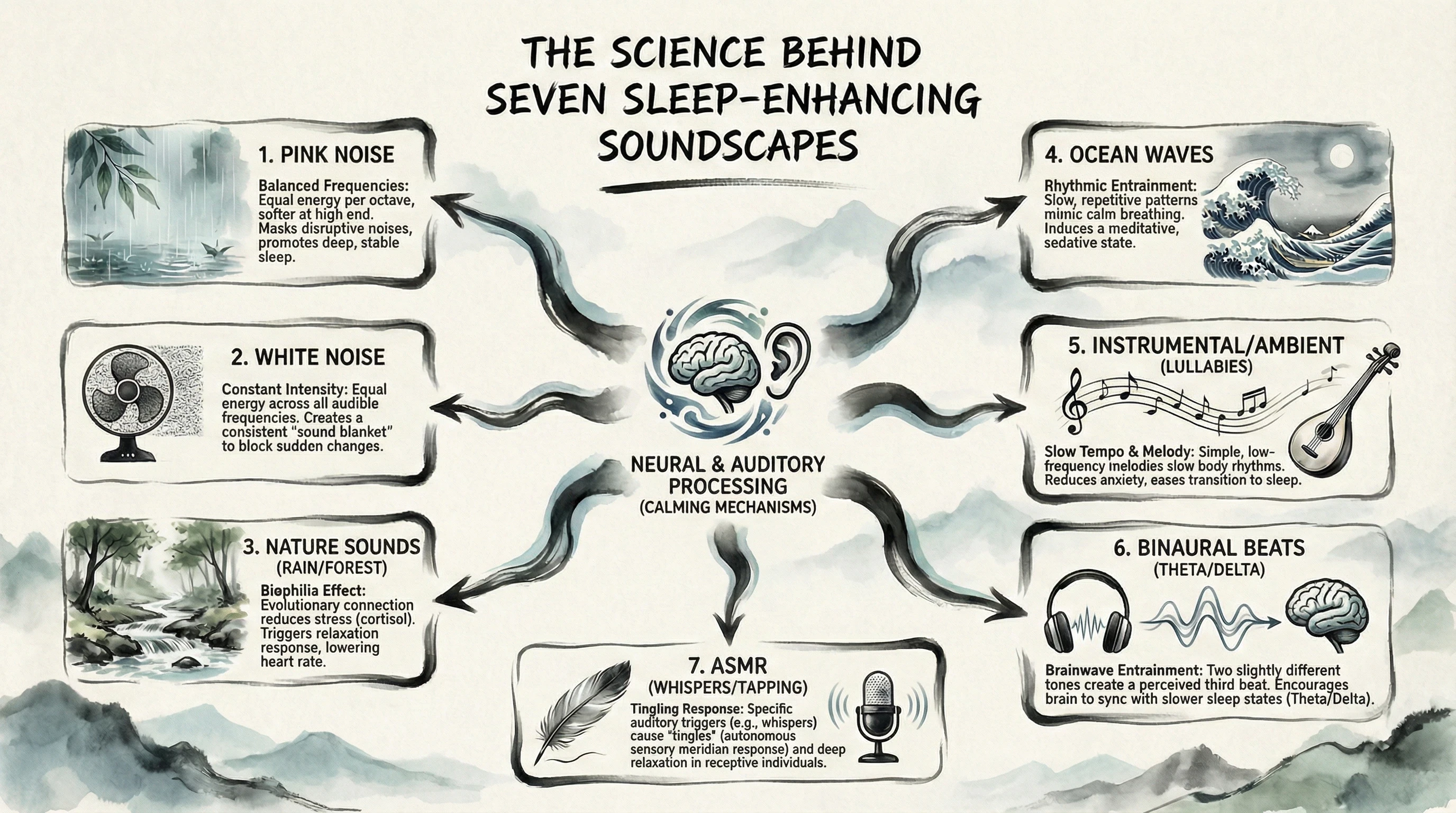
Let’s get tech-savvy for a second. Sound technology has come a long way, and nowhere is it more apparent than in the development of these AI-powered soundscapes. They combine cutting-edge algorithms with evidence-backed research to create sounds tailored specifically to help you sleep better.
Each of these top seven soundscapes stands on a unique pedestal of scientific merit, crafted to suit particular sleep needs and preferences.
There are options like deep ocean waves or gentle streams that cater to those who love nature, while the subtle hum of binaural beats is perfect for those who need something a bit more abstract.
Let’s break down what makes each one tick: ocean waves create a rhythmic pattern reminiscent of a heartbeat, which can be soothing, while binaural beats help synchronize brain waves, enhancing the relaxation process.
Companies in this space really know their stuff, pulling from both sleep science and user feedback to continuously refine their soundscapes.
What’s really cool is the fusion of technology with human experience. Imagine AI that learns from your sleep patterns, making real-time adjustments to soundscapes to optimize sleep quality just for you! It’s like having a personalized sleep DJ.
Choosing the right sound is about trusting your gut and your ears, but with these AI-assisted solutions, you’re in good hands. Soundscapes aren’t just about playing random noises; they’re a crafted journey to better sleep.
Music to Sleep By: Songs Backed by Research
Ever heard of a song so relaxing it’s scientifically proven to help you doze off? Introducing “Weightless” by Marconi Union. This tune is in a league of its own, engineered specifically to calm the mind and body.
So, why does this song have such an impact? For starters, it combines harmonies, rhythms, and bass lines to slow down heart rate, reduce blood pressure, and decrease levels of cortisol, putting everything in chill mode.
The song’s structure lacks a repeated melody, giving it an abstract quality that keeps the brain from anticipating what comes next. This unpredictability lets your mind drift off into a relaxed state without trying to follow along, which is exactly what’s needed to catch some z’s.
Research suggests this tune can reduce anxiety by up to 65% and promote deeper relaxation. It’s like a soundscape but in a single, well-curated track, a perfect addition to your nighttime playlist.
Incorporating “Weightless” into your sleep routine can be as simple as playing it softly in the background, right before bed. It’s also great for winding down after a long day. Just a song, yet so much more when it comes to fostering a peaceful transition to sleep.
How to Effectively Use Soundscapes and Music in Your Sleep Routine
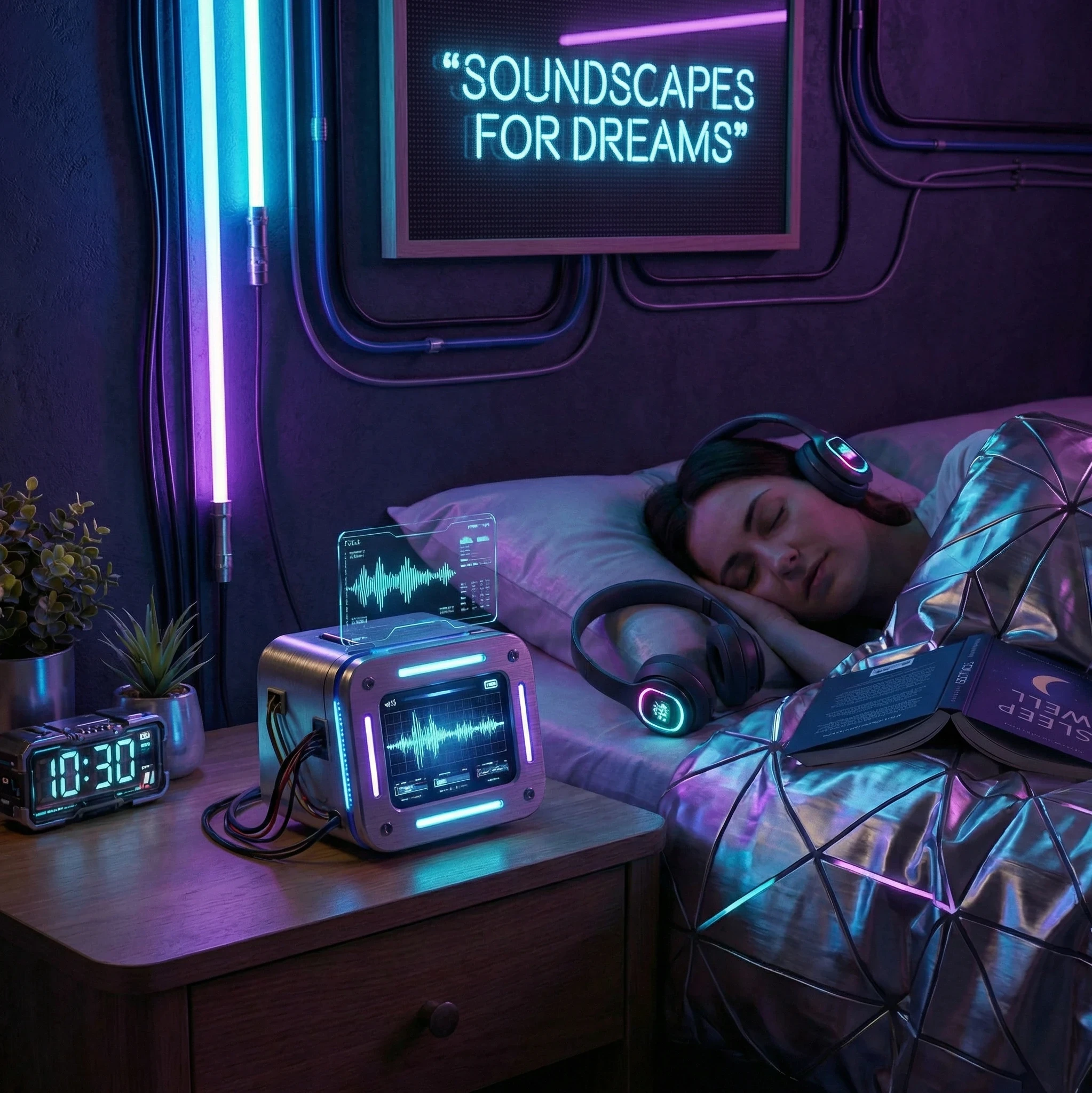
Building a solid sleep routine doesn’t have to feel like rocket science, but a touch of strategy helps. First off, selecting the right soundscape or song is key. It’s about finding what resonates with you. While “Weightless” or ocean sounds work for many, your sleep soundtrack should be uniquely yours.
To weave soundscapes into your nighttime ritual, start by allocating a quiet, comfortable space, free from distractions. Pair your chosen sounds with calming activities, like reading or light stretching, to cue your body and mind it’s time to unwind.
Adjusting the volume is another smart move. Keep it at a level that complements, not competes with, the tranquility you’re aiming for. It shouldn’t be too loud or too soft, just comfortable enough to mask background noise without drawing attention.
Explore personalizing your sound selections. Most sound design apps allow tailored settings like equalizer adjustments or sound layering, giving you the power to customize your sleep environment perfectly.
Lastly, don’t forget to occasionally assess your sleep quality. Use apps or journals to note how different sounds impact your rest. Patterns in your sleep can suggest tweaks, helping you optimize your audio sleep aids for maximum effect.
“You now have everything you need to get started—feel free to ask questions or share your perspective in the comments.”