
Breathing might seem like one of those things we just do without thinking, but it’s actually a powerhouse when it comes to getting good sleep. The way you breathe can have some serious effects on how well you sleep. Slow, deep breaths can signal your body that it’s time to chill out and reset, making it easier to catch those Z’s.
Deep breathing is more than just a yoga thing. It’s a legitimate way to tap into your nervous system, helping it shift gears from stressing out to winding down. When you take deep breaths, you’re doing this cool thing where you increase oxygen levels in your blood and lower your heart rate, getting your body in the right zone for sleep.
Many sleep experts are big fans of monitoring breathing patterns. During sleep, your breathing should naturally slow down and become more rhythmic. But if you’re tossing and turning, it could be a sign that your breathing isn’t as relaxed as it should be. Taking control with some deliberate deep breaths can get you back on track.
Deep Breathing Techniques for Better Sleep
When it comes to deep breathing techniques for better sleep, the options are pretty straightforward yet incredibly effective. One popular method is the 4-7-8 technique. You inhale for four counts, hold your breath for seven, and exhale slowly to a count of eight. This method eases your mind and helps relax those muscles.
Another technique to check out is diaphragm breathing. By breathing deeply from your belly instead of shallow chest breathing, you activate the relaxation response. This type of breathing takes practice but can become second nature over time with daily practice.
Then there’s alternate nostril breathing, often used in yoga practices. It involves inhaling through one nostril, holding the breath, and exhaling through the other. It might sound a bit funky at first, but it’s actually great for balancing the mind and calming you down.
Getting the hang of these techniques isn’t just about the mechanics. It’s about timing and patience, too. Try practising in a calm environment, maybe right before you hit the pillow. And remember, don’t stress if you’re not a pro right away. Consistency is key here.
Lastly, small mistakes can mess with your breathing flow. Common ones include breathing too quickly or not fully exhaling. So, slow it down, focus on every breath, and keep away from distractions. You’ll find your rhythm soon enough.
Enhancing Your Breathing Exercises with Music
Music isn’t just for jamming out in the car or lifting your workout vibes; it can play a pretty awesome role in helping you relax and sleep better too. When you combine music with deep breathing, you’re doubling down on the relaxation powers.
Picking the right tunes is a big part of this. You want music that’s going to soothe, not energize. Some people swear by classical or instrumental tracks, while others find ambient sounds more their speed. The key is finding something that helps you unwind.
Several playlists are specifically designed to help with sleep, but it’s a personal thing, so try a few options out. Music therapists often suggest starting with tunes that have around 60 beats per minute, which naturally encourages calmness and syncs with your breathing rate.
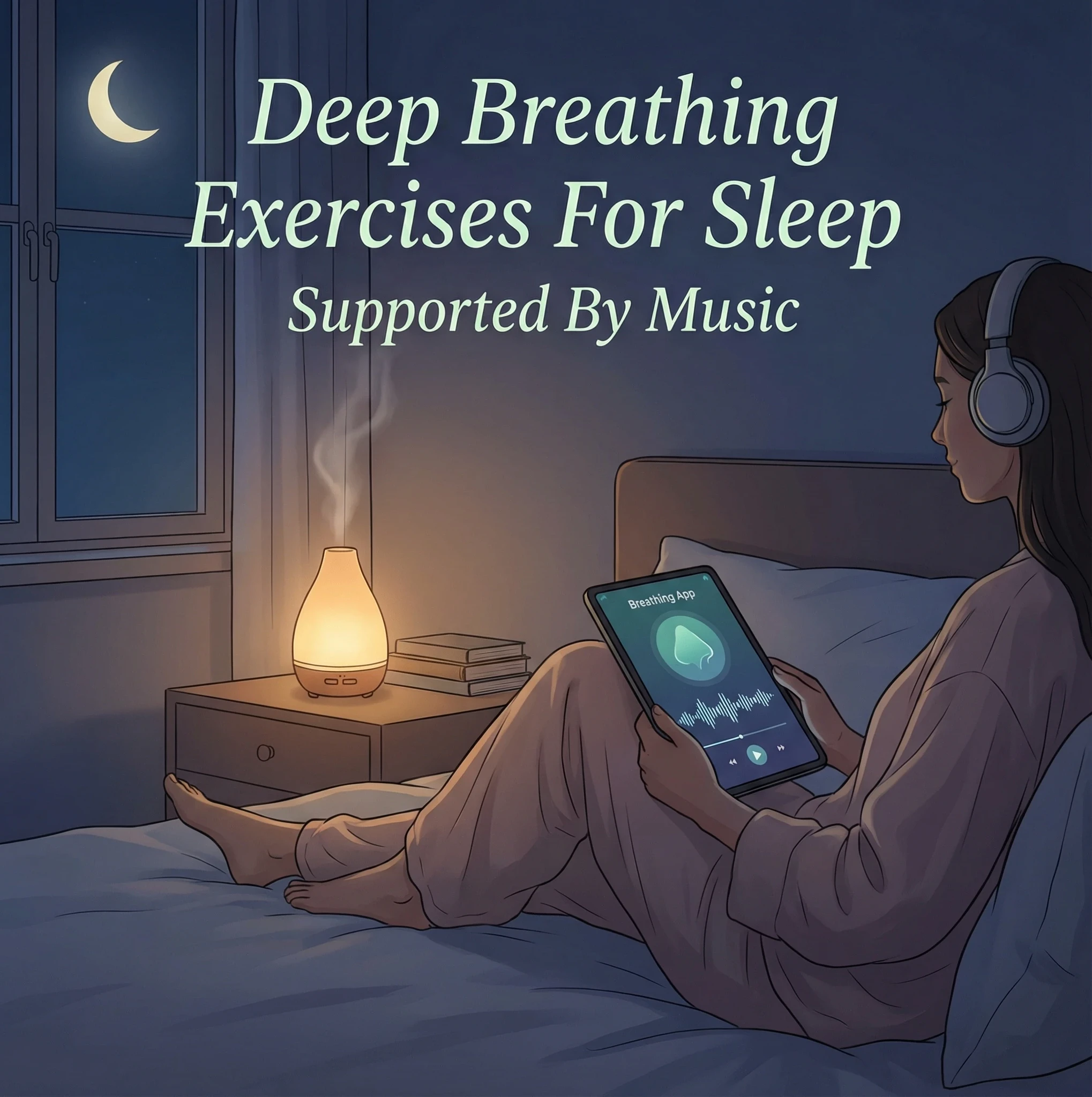
When you’re ready to combine music with your breathing exercises, start by setting up a comfy spot. Play your chosen music softly in the background as you go through your breathing routine. The music should be a gentle backdrop, not the main event, nudging your mind into relaxation mode.
The combo of music and breathing can make your routine more engaging and possibly more effective, leaving you feeling even more refreshed in the morning. So, if you’re looking to up your sleep game, hitting play on some calming tracks as you breathe can be a game changer.
Creating a Sustainable Sleep Routine with Deep Breathing and Music
Building a sleep-friendly routine around deep breathing and music isn’t just a one-time trick—it’s about regularly showing up, night after night. Consistency sets the stage for your body and mind to know when it’s time to relax, and that means weaving these techniques into your daily routine.
Start by carving out time before bed dedicated to unwinding. This doesn’t have to be a long stretch of time—ten or fifteen minutes can do wonders. Dim the lights, maybe do some light stretching or yoga, and cue your favorite calming playlist. Then, let those deep breathing exercises take over, syncing with the music.
As you stick with it, you might find that the benefits go beyond just better sleep. Deep, rhythmic breathing paired with music can help lower stress throughout your day, maybe helping you even before it’s time for bed.
Heard from folks like you, many have found this combo to be life-changing. People report not only smoother sleeps but also waking up feeling more refreshed and ready to tackle the day. Hearing their stories can inspire anyone to give this routine a proper shot.
Keeping up with this holistic approach could mean better quality sleep, better mood, and an overall better outlook on the day ahead. It’s about creating a peaceful end to your day so you can face tomorrow with clear minds and a rested body.