
Sound affects sleep in more ways than a lot of people realize. I’ve spent plenty of nights experimenting with everything from rainstorm playlists to white noise machines, trying to find that perfect vibe to help me actually drift off. So when I found out that AI could build personalized sleep soundscapes, I got pretty curious. It turns out, AI-generated sound environments work by customizing what you hear so that it supports your unique preferences and sleeping style. Here I’m going to break down how it works and how you can use these tech-powered soundscapes for better rest.

Why Personalized Sleep Soundscapes Matter
Falling asleep isn’t always about just shutting your eyes and hoping for the best. Sometimes the background noise in your room, like traffic, neighbors, or random creaks, can get in the way. Some people need total silence, while others sleep best with calming sounds in the background. The trick is that what works for one person might keep someone else awake.
Studies show that tailored sound environments can help people fall asleep faster and improve the overall quality of rest. This idea isn’t brand new; nature sounds, white noise, and gentle music have been used for ages. But with AI, you can now get audio that isn’t just generic but is actually built around what helps you relax most.
How AI Builds Personalized Soundscapes
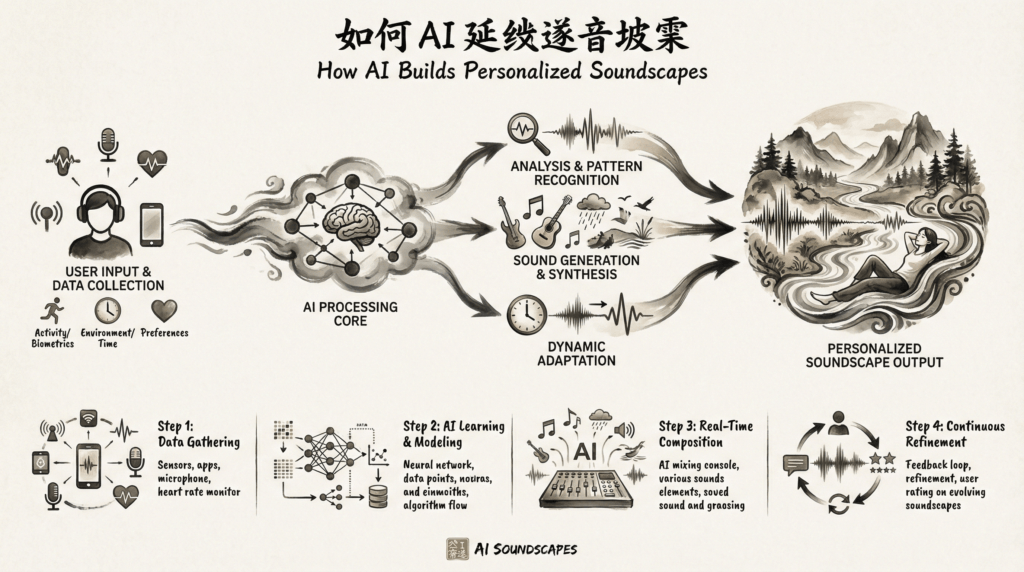
AI-driven apps and devices use information about your sleep habits, preferences, and even biometrics to create soundscapes for your needs. These platforms gather details through things like sleep trackers, short quizzes, or simple feedback after a night’s sleep. Here’s a simple breakdown:
- User input: You might choose the sounds you generally like (rain, wind, ocean, etc.), set your wake-up time, or note how well you slept the night before.
- Environmental data: Smart devices can pick up on the noise level in your room or changes in conditions like temperature, then adjust the sound accordingly.
- Sleeping patterns: If you wear a sleep tracker or smartwatch, AI can spot when you’re restless or entering deeper sleep, then adjust the sound to keep things soothing.
The software learns over time. The more you use it and share what helps or distracts you, the better it gets at creating backgrounds you barely notice but that really help you doze off.
Quick Steps to Get Started with AI-Powered Sleep Soundscapes
Using AI for sleep sounds doesn’t involve complicated tech or a steep learning curve. Here’s how to get into it, even if you’re new to all this:
- Pick a sleep sound app or device: There are a bunch of popular apps out there, like Endel, Sleep Cycle, and Headspace, that offer AI soundscape features. Smart speakers such as Amazon Echo or Google Nest also offer customizable sound routines.
- Create a profile: Most AI sound apps want to learn about your habits. You’ll probably set bedtime, favorite sounds, and maybe even rate your sleep each morning.
- Experiment: Play around with different sounds and settings. Try nature tracks, white or pink noise, or even music with gentle rhythms. Make note of which ones make you feel calmer.
- Give feedback: After a few nights, rate how well you slept. The more you tell the AI what’s working, the more it learns to tweak the soundscapes for you.
This approach lets the technology figure out what works best for you, instead of forcing you to scroll through hundreds of random playlists each night.
What to Think About Before Using AI for Sleep
Not every sound or gadget is going to fit your lifestyle perfectly. Here are a few things worth considering to get the most out of AI-driven sleep soundscapes:
- Sound Quality and Variety: Higher quality audio usually helps with immersion. Also, having a range of different sound options will make it easier to try out what truly matches your mood.
- Privacy Concerns: If you’re using a device that collects sleep or environmental data, it’s smart to check the company’s privacy practices. Knowing how data gets stored or used helps you make an informed choice.
- Device Placement: If you’re a light sleeper, the position of a speaker can matter. Sometimes placing it across the room or set on a low volume is better.
- Battery Life and Power Needs: If you’re using a phone or portable device for sleep sounds, keeping it charged is important. Some people prefer dedicated sound machines for this reason.
Sound Quality and Variety
I’ve noticed a big difference between compressed, buzzy audio on cheap apps and the richer, layered sounds on better platforms. Some AI apps can actually blend multiple sound layers, like wind and distant thunder, with smooth transitions. This feels more realistic than a short loop that repeats and becomes distracting. If you’re picky about what you hear at bedtime, finding an app with a wide range of high quality sounds is really helpful.
Privacy Concerns
Many AI sleep helpers ask for data input, either directly from you or passively from your device. If you care about privacy, I always recommend checking reviews and privacy terms. Trusted brands usually allow you to control what gets shared and offer online and offline modes if you’re not comfortable with cloud syncing.
Device Placement
I’ve had the best luck when my sound device isn’t blasting right next to my head. Positioning a speaker on a nightstand or across the room helps create a gentle background, instead of something that feels right in your ear.
Battery Life and Power Needs
Some apps drain phone batteries faster, especially if you leave your screen on. For nightly use, a plugin white noise machine can be a simple alternative, or just charge your phone before bed to avoid any late night disruptions.
These details can make the difference between waking up refreshed and waking up annoyed because the music cut out part way through the night.
Tips and Tricks for Maximizing Your AI Sleep Experience
I’ve found a few habits that make sleep soundscapes way more effective, especially when using AI-powered options:
Keep a Sleep Journal: Jot down how you slept after trying a new sound. Quick notes on what worked and what didn’t give the AI better feedback when you fine tune your preferences.
Combine with Routine: Start your soundscape a half hour before you plan to fall asleep, as a “wind down” to help your brain and body get used to it. AI apps can be set to fade out as you reach deeper sleep. It’s a small thing, but it really helps with not waking up to abrupt silence.
Stay Consistent: Using the same sounds or the same wind down routine trains your body to recognize “sleep time,” making it easier to fall asleep over multiple nights.
Explore Binaural Beats: Some AI soundscape apps offer binaural beats, which are special tones that claim to promote relaxation. Not everyone loves these, but for some, they can add a next-level cool touch, especially on anxious or restless nights.
You can also play around with mixing in gentle breathing exercises, meditations, or adjusting your room’s lighting. Pairing these elements with your personalized soundscape makes the environment even more soothing. Think of your bedroom as an at-home sleep lab, where you’re not just hoping for better rest, but actively testing and improving what works best for you.
Popular Real World Uses and Applications
AI sleep soundscapes aren’t just for people struggling with insomnia. A growing number of folks use them for power naps, meditation breaks, or even as a calming background during the day. For example, people working odd shifts can use adaptive soundscapes to trick their bodies into feeling ready for sleep even if the sun is up. Parents have found that certain AI soundtracks help children settle down for naps. And for travelers or shift workers, AI-generated sound environments can mask unfamiliar or disruptive noises in hotel rooms or airplanes.
- Workfromhome focus: Some AI apps let you switch from sleep to focus modes, adapting the background to keep you relaxed but alert during the day.
- Hotels and travel: Lightweight sleep sound apps can be a lifesaver in noisy hotels or while battling jet lag.
- Child sleep routines: Custom AI soundscapes with nature or soft instrumentals have helped families build predictable bedtime routines for restless kids.
And it doesn’t stop there. Some people use AI-powered sound environments during study sessions to improve concentration, or pair them with yoga and mindfulness to get even more out of their self-care routines. The flexible tech lets users of all ages put their own spin on how, where, and when they want soothing audio, opening doors to new habits and routines for rest, focus, or relaxation.
Frequently Asked Questions
Here are some common questions people have when they’re thinking about trying AI-powered sleep soundscapes:
Question: Can AI soundscapes help everyone sleep?
Answer: Most people find at least some benefit, especially if they’re sensitive to noise or have trouble winding down. The key is trying out different options to see what fits you best.
Question: Will these soundscapes replace medication or medical advice?
Answer: AI soundscapes can be helpful for mild sleep issues, but serious sleep disorders should be discussed with a healthcare professional.
Question: Do I need fancy gadgets for this to work?
Answer: Not really. Many people just use their existing phone or tablet with a good pair of speakers. If you love gadgets, there are plenty of dedicated devices too.
The Bottom Line on Using AI for Personalized Sleep Soundscapes
Technology is changing the game when it comes to getting quality sleep. AI-generated soundscapes let you skip past generic playlists and get something tailored to how, and when, you love to sleep. As you try out different tools, focus on what feels relaxing and sustainable for nightly use. The more you work with these customizable environments, the more likely you are to finally get the kind of sleep you’ve always wanted, all with just a few taps or settings tweaks. Keep exploring and adjusting, and better sleep could be just a sound away.
“I trust this article provided valuable insight. Share your thoughts or questions in the comments below—I’d love to hear from you.”