
Ever laid in bed staring at the ceiling, mind racing instead of resting? AI-driven sleep soundscapes might be the game-changer you need. These nifty creations aren’t just about playing sound loops. Driven by artificial intelligence, they adapt and create personalized sound experiences tailored to hush your busy mind and coax it into a peaceful night’s sleep.
AI technologies analyze your sleep patterns and preferences to curate soundscapes that blend seamlessly into your nightly routine. Think of it like having a private DJ, expertly crafting a vibe that leads you gently from wakefulness into restful slumber. This precision helps in tuning out distractions, ensuring that you’re not startled awake at 3 AM by a barking dog or distant sirens.
The perks? They’re pretty impressive! Users report lowered stress levels and improved sleep quality, which boosts productivity and mood during waking hours. It’s basically like having a spa night every night – without splurging on scented candles or bath bombs. Technology doing its thing, making life a tad easier one soundscape at a time.
The Science Behind Sound Frequencies and Sleep
Our brains are pretty amazing when it comes to recognizing patterns and reacting to sound frequencies. When we’re talking about sleep, different frequencies can have a distinct impact on our relaxation and how we achieve that serene snooze mode. It’s all about finding the sweet spot that gets the brain to slow down and chill.
Sound frequencies range from low to high, each interacting with the brain in unique ways. Low frequencies bring that deep, resonant hum; middle frequencies add a touch of balance, while high frequencies tend to be more alerting or stimulating.
AI has this crazy capability to figure out which frequencies you vibe with the most, meaning it can tailor sounds that suit your specific sleep patterns and lifestyle. It gets a read on your brainwaves, identifies what you need for improving relaxation, and, boom, it spins a personalized sonic experience. How cool is that?
It’s more than just a playlist playing through the night. By leveraging different frequencies, AI creates a layered sound experience that aligns with your natural sleep-wake cycles. That means more REM sleep, less tossing and turning, and waking up feeling more like a human and less like a zombie.
The bridges between these frequencies can play a huge role in crafting the perfect soundscape. Whether it’s the bassy calm of a forest or the mid-range comfort of distant thunder, the science gives you that cozy feeling of security, like a sonic hug you didn’t know you needed.
Low Frequency Layers: The Foundation for Calm
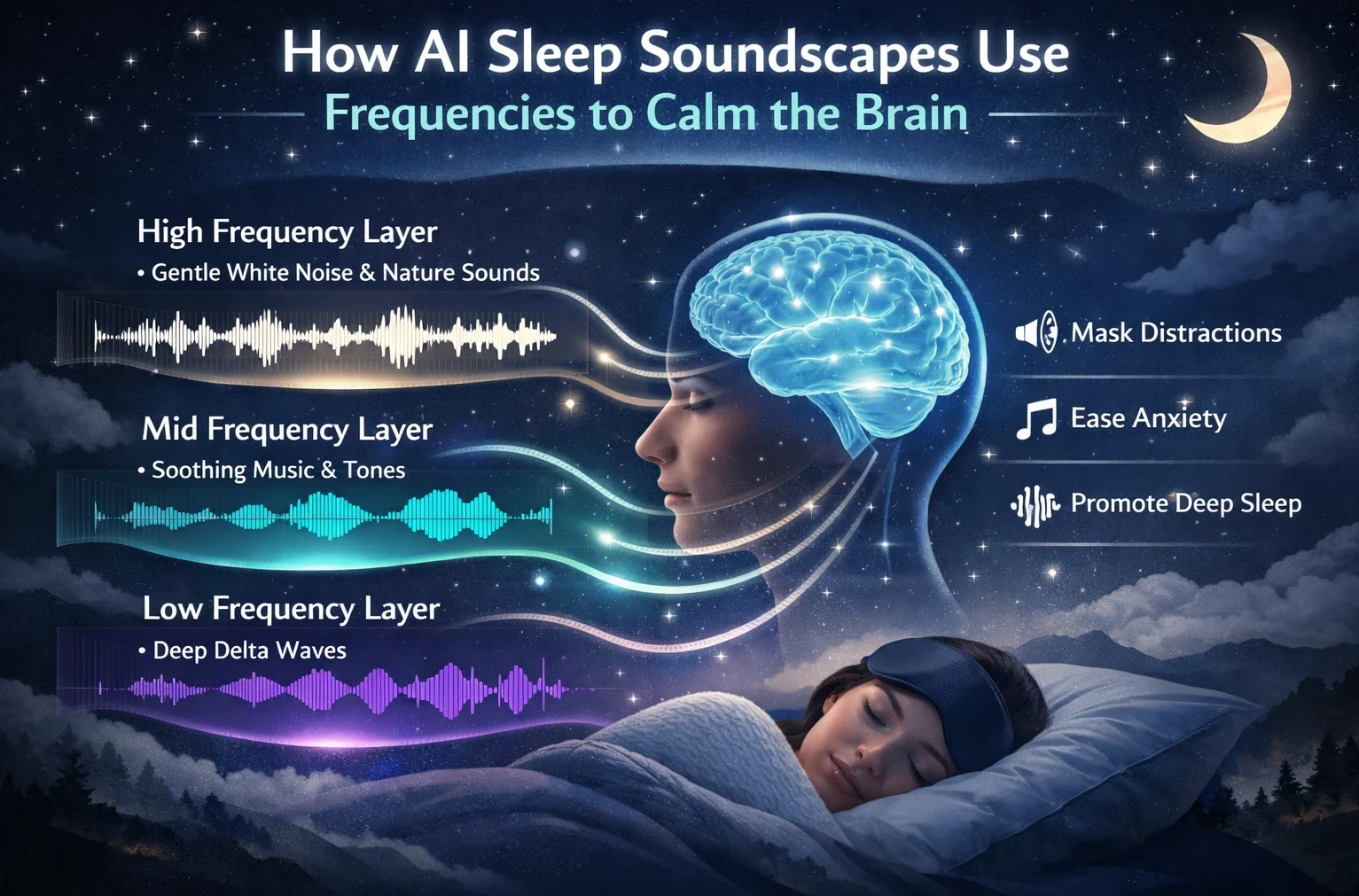
Low frequencies are like those deep, resonant sounds that seem to wrap around you, providing a soothing, grounding effect. Imagine the steady sound of ocean waves or a gentle hum. These are your low-frequency heroes, working silently to ease your mind into relaxation.
The magic behind low-frequency layers lies in their ability to interact with our brain waves. They encourage our brains to switch from high alert modes into slower oscillations, which spells relaxation and, ideally, sleep. It’s like a friendly, ‘Hey, it’s time to wind down.’
Consider this—the stuffy hum of an air conditioner or even the distant rumble of thunder can make you feel safe and secure. These sounds tap into our primal instinct that everything is calm and secure, allowing our stress centers to take a breather.
Real-world stories showcase how individuals find a new level of tranquility through low-frequency soundscapes. Whether it’s someone who played city soundscapes to keep the chaos out or another who used the sound of deep bells, everyone had one thing in common: They found peace in the sound’s embrace.
When AI matches these low frequencies with your unique sleep patterns, it’s like laying down on a memory foam mattress made just for your brain. The frequencies sink in and hold you gently, ensuring that you drift off to sleep without a care in the world.
Middle Frequency Layers: Bridging Tranquility and Alertness
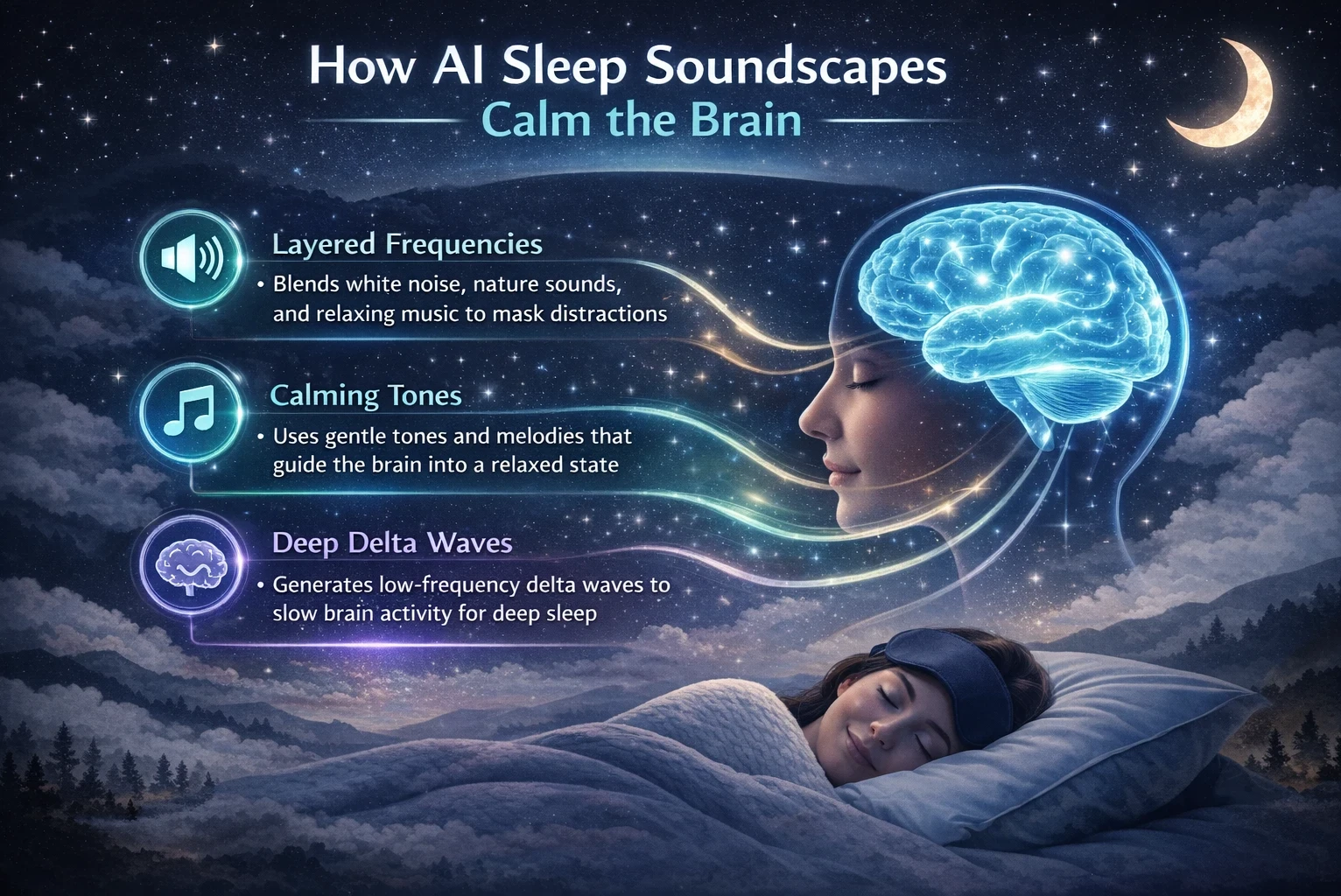
Middle frequencies create a bridge between those soothing low rumbles and the more stimulating high pitches. They’re the unsung heroes in your perfect sleep soundtrack, striking a balance that keeps the sleep cycle running smoothly.
These mid-range sounds often mimic familiar, comforting noise like steady rainfall or the gentle rustle of leaves. They promote a restful REM sleep phase, fostering an environment where your body can properly restore itself overnight.
There’s something universally comforting about middle frequencies—the line between tranquil and alert. It’s like nature’s way of saying ‘all is fine,’ making sure your brain doesn’t stir unless it’s genuinely needed.
In practical scenarios, a lot of soundscapes use these frequencies to blend into the background, providing a consistent sound that’s not too loud or distracting. Think along the lines of soft acoustic music or the consistent churning of a distant train engine.
These versatile sounds play a massive role in making your sleep environment adaptable throughout the night. As AI processes your responses to these sounds, it can adjust and refine the frequencies to ensure you’re not just sleeping, but sleeping well.
Incorporating High Frequency Layers for Alertness and Wakefulness
High frequency layers lend a hand when it’s time to gently ease out of dreamland and face the day. These sounds are like the audio equivalent of a soft ray of sunlight peeking through your window, coaxing your brain to rise from restfulness.
Sounds like birds chirping in the morning or tinkling chimes are common high-frequency elements that wake the brain gradually, letting you transition from deep sleep into wakefulness without the jarring effect of an alarm blaring.
High frequencies work by slightly increasing alertness, which is why you’ll often find them used towards the end of sleep cycles. They ensure that sleep transitions naturally, reducing the chances of grogginess or sleep inertia that can follow a jarring wake-up call.
In a well-crafted soundscape, AI deftly overlays high frequencies with lower tones to create a balance that’s perfect for waking. So, when morning arrives, and the higher pitches gradually phase in, your mind is gently nudged into alertness.
By matching these sounds with your typical waking patterns, AI enhances your morning routine, setting a positive tone for the day ahead. Your brain’s refreshed, you’re in tune with natural waking processes, and mornings feel less like a chore and more of a gift.
“You now have everything you need to get started—feel free to ask questions or share your perspective in the comments.”