
You ever just want to peek inside your brain and see what’s going on up there? Binaural beats give us a little taste of that magic. In simple terms, they’re sound waves that play two different frequencies into each ear, which your brain then tries to even out. This little trick can shift your brain waves into a different gear, creating a sensation that’s kinda like mind meditation.
Back in the olden days, specifically the 1800s, a physicist named Heinrich Wilhelm Dove stumbled upon this groovy concept. He discovered that when each ear hears a slightly different frequency, your brain gets a little creative and invents a third beat, a phantom beat that can change how you’re feeling.
So here’s the skinny on how it all works: binaural beats influence our brain waves, those electric vibes flowing through the noggin 24/7. They come in flavors like Delta, Theta, Alpha, Beta, and Gamma. Each one’s got its own thing going on, like Delta for deep sleep or Alpha for chill vibes.
Binaural beats are often used to sync up our brain waves, giving them that tweak for better relaxation or focus. Think of it like tuning your instrument before a show—you just gotta hit the right note.
The Impact of Binaural Beats on Sleep Patterns
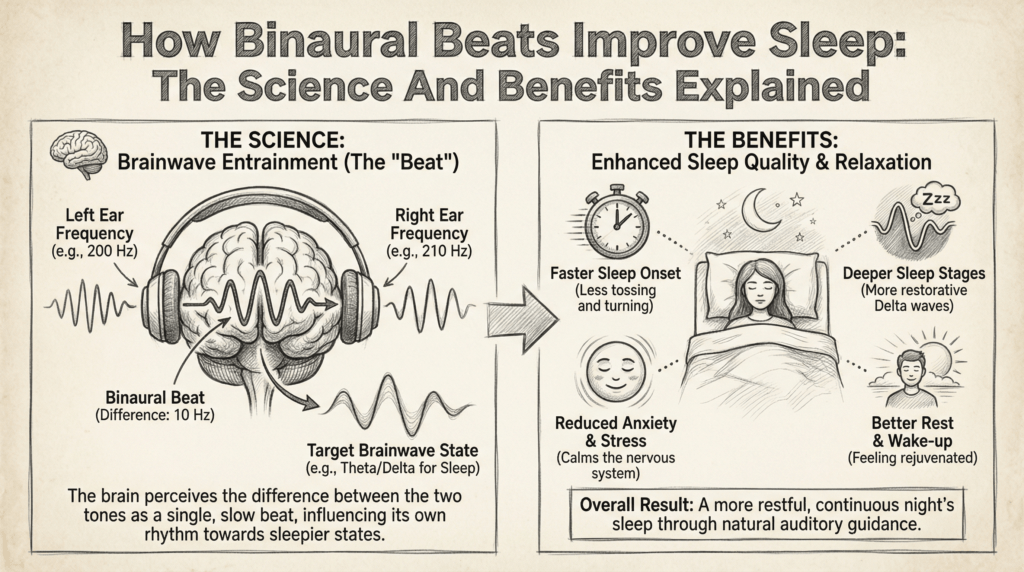
Ever wonder why sleep can feel so elusive sometimes? Turns out, it might have something to do with the dance our brain waves do every night. Binaural beats step in like a DJ for your brain, nudging those waves into the right groove for some quality shut-eye.
Our brains go through several sleep stages, each with its unique brain wave frequency. We’re talking light sleep, deep sleep, and even bouts of dream-filled REM. Binaural beats can help synchronize those frequencies to match whichever stage you’re aiming to hit for the night.
There’s some real proof out there too. Studies have shown that listening to binaural beats before and during sleep can lead to better quality zzz’s. It’s like giving your sleep that extra sprinkle of magic. People report falling asleep faster, enjoying deeper sleep cycles, and waking up feeling refreshed.
Compared to popping a sleeping pill, binaural beats are a gentler alternative. No morning grogginess, and they’re way cheaper! Plus, they don’t just mask the problem—they help your brain naturally do what it already knows how to do, making them a valuable tool in any relaxation toolkit.
Diving into the Benefits: How Binaural Beats Elevate Sleep Quality
Ever feel like your brain just won’t shut off when you hit the pillow? Binaural beats might just be the answer to taming those racing thoughts. They work like a cozy blanket, reducing stress and easing your mind into a peaceful state, setting the stage for better sleep.
One of the biggest perks of binaural beats is they enhance deep sleep, that magical stage where the body heals and recharges. When you’ve got binaural beats working in your favor, you often sleep more soundly, which means more energy and clarity come morning.
Personal stories abound with folks swearing by their binaural beats playlist. Many share tales of waking up feeling less foggy and more like they’re ready to tackle the day. It doesn’t just stop at sleep—waking up refreshed can mean improved focus and mental clarity for all those daily tasks.
And let’s not overlook the cognitive benefits. Regularly getting good sleep is like a power-up for your brain, helping boost memory and keeping your thinking sharp. When brain waves are balanced, you’re more likely to enjoy mental clarity and maybe even a little more pep in your step.
Guidelines for Using Binaural Beats: A Practical Approach
Ready to give binaural beats a try? It’s super straightforward, but there are some things to keep in mind to really make the most of it. Picking the right frequency is key. Lower frequencies, like Delta (1-4 Hz), are great for slipping into deep sleep, while higher ones, like Alpha (8-14 Hz), are more for relaxation and unwinding.
Think of starting with a bedtime routine that includes binaural beats as setting the scene for a good night’s rest. You might want to find a quiet spot, pop on a pair of decent headphones, and let the beats work their magic, ideally about 30 minutes before you plan to sleep.
There’s a ton of tech to help you out, from specialized apps to YouTube playlists. With most of us having headphones at hand, making binaural beats part of the nighttime groove is easier than ever before. It’s all about finding what works best for you.
While there’s a lot to love, it’s important to tackle any misconceptions head-on. Binaural beats are safe for most adults, but if there’s any medical concern, chatting with a healthcare professional is always a good move. At the end of the day, it’s all about finding harmony in your sleep routine, naturally.