
EEG technology has been around for a while, tracing its origins to the early 20th century. Back then, it was all about these clunky machines in labs, mostly focusing on research and hospital settings. Fast forward to today, we’ve got these slick, user-friendly EEG wearables making mental health monitoring way more accessible.
The shift from those massive clinical devices to compact, wearable ones is like moving from old-school phone booths to the smartphones we all carry around now. It’s all about accessibility and convenience, bringing brain wave monitoring right to your wrist or head without needing a lab coat.
Now, it’s cool that EEG wearables can provide real-time data, offering insights into our stress levels, sleep patterns, or even focus. But, like any tech, they’ve got their quirks. Sometimes the readings can be affected by external noise or even how the sensors are placed. So, while they’re game-changers, it’s good to remember they’re part of the broader mental health toolkit.
Breaking Down the Basics: How EEG Wearables Work
When we talk about EEG wearables, it boils down to tracking electrical activity in your brain. These devices pick up on the tiny electrical signals produced when your neurons fire. Think of it like eavesdropping on an office conversation—only much cooler and involving brain waves!
Most EEG wearables on the market are designed to be easy to use. They resemble headbands or even earbuds that you can put on without much fuss. By sending these signals to a connected app, the data gets visualized, helping to interpret what’s going on upstairs. It’s like having a little brain diary right at your fingertips.
But it’s not all straightforward graphs and charts. Capturing accurate data relies heavily on how well the device fits and contacts your skin. You might get less data fidelity if it’s not snug or placed correctly. Plus, individual differences in head shape or hair can throw in some variability.
Technology keeps improving, but interpreting what these signals mean for your mental state is still a budding science. EEG signals can tell if you’re relaxed or agitated, but translating those signals into actionable insights into mental health is where it gets a bit tricky. Patience and a bit of tinkering might be needed to get the best results.
Transformative Benefits: EEG Wearable Devices in Mental Health Care
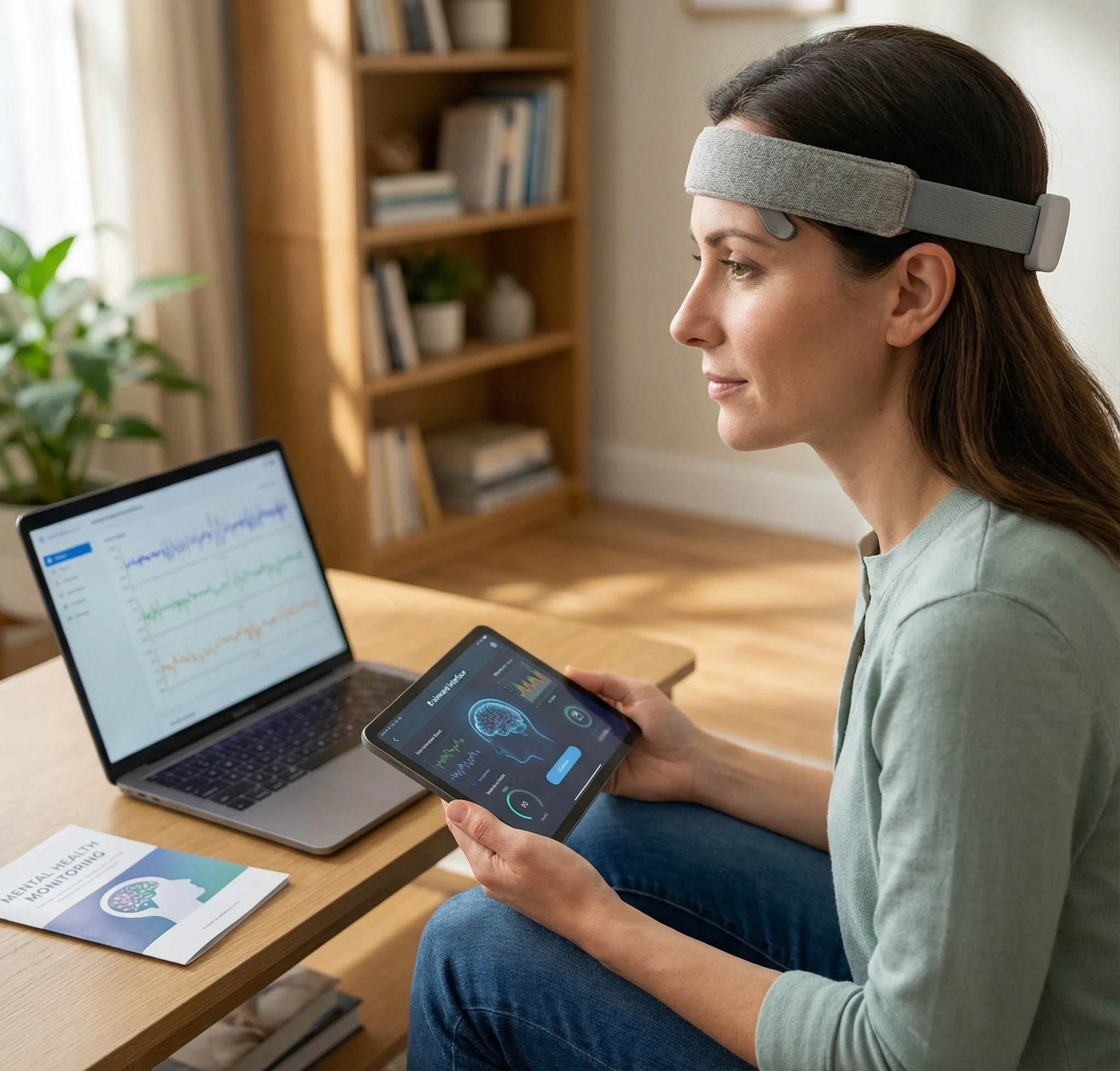
EEG wearables are flipping the script on how we keep tabs on mental health. Instead of waiting for symptoms to reach a boiling point, these devices allow for early detection. Continuous monitoring can pick up on subtle shifts in mood or stress levels, offering a heads-up before issues escalate.
These gadgets also pave the way for more personalized treatment plans. By tracking patterns over time, mental health professionals can fine-tune interventions to match your specific needs. It’s like having a customized playlist for your mental health journey.
Patient engagement is another area where EEG devices shine. Real-time feedback fosters self-awareness, helping you understand triggers and reactions better. It’s empowering to see data reflect how meditation or deep breathing can shift your mental state.
Stress and anxiety wearing you down? EEG wearables offer a way to manage these heavy hitters by monitoring physiological changes. You get insights into what calms you down or ramps you up, arming you with information to make informed decisions about your well-being.
Addressing Concerns: Privacy, Accessibility, and the Future of EEG Wearables
Our brains house some pretty personal stuff, right? So, when it comes to EEG wearables, data privacy is a top concern. These devices collect sensitive information, and it’s crucial that companies prioritize strong encryption and user consent. Always make sure to check the privacy policies of any device you’re considering.
Accessibility is another key player in this space. While some devices might carry a hefty price tag, others are becoming more budget-friendly. As the tech matures, it’s essential that it also becomes widely accessible to truly benefit public health.
What’s exciting is how these gadgets could eventually sync up with other health technologies. Imagine pairing EEG data with heart rate monitors or sleep trackers for a fuller picture of your health. This integration is on the horizon and could revolutionize personal health tracking.
Looking ahead, the potential for EEG wearables is massive. From helping develop more precise AI mental health tools to becoming a staple in personalized healthcare, the future is bright. But as we push forward, it’s vital to tackle issues head-on, ensuring technology is safe, effective, and inclusive for everyone.
” I trust you found this article helpful. Feel free to leave any comments or questions below in the comments box”