
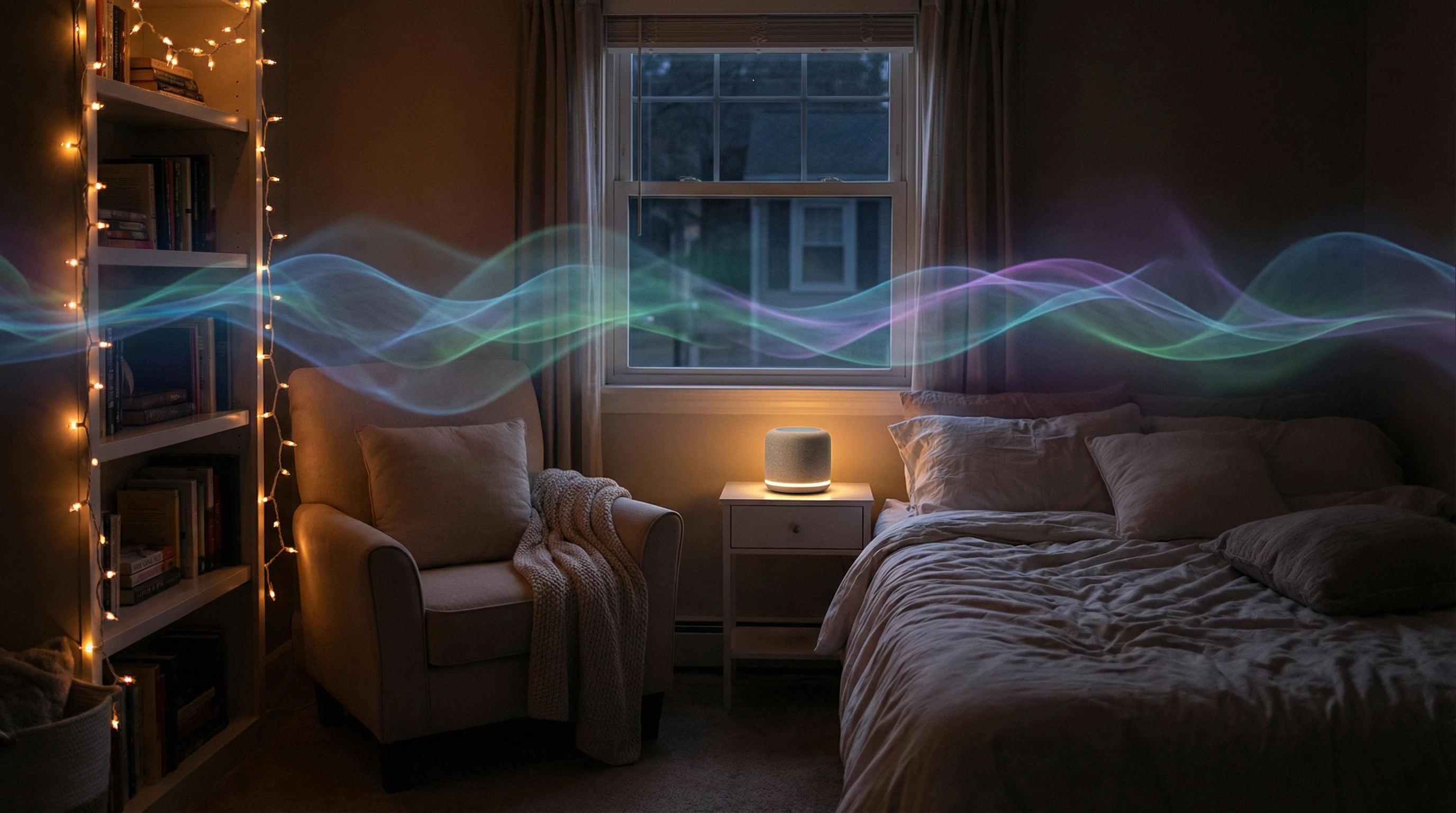
A peaceful night’s rest begins with a quiet mind. Sleep aid music creates a gentle space where the body can unwind, inviting calmness to settle in and guiding you naturally toward deep, restorative sleep.
Why Sleep Aid Music Works for Deep Sleep
Soft rhythms and slow, steady tones help ease stress, lower tension, and support the body’s transition into a relaxed state. As your breathing steadies and your thoughts soften, your mind becomes more open to drifting into deeper sleep. This isn’t about drowning out noise with random sounds; instead, it’s about setting a mood where your body feels safe to let go and your mind doesn’t race with anxious thoughts.
Sleep aid music often features gentle melodies at slower tempos (around 60 beats per minute) that match the heart rate of a person who’s fully relaxed. Many soothing tracks include subtle delta wave frequencies, which are sounds that mirror the brain’s natural patterns during deep sleep. These calming vibrations help quiet mental activity so your body can fully rest, repair, and restore through the night. Adding sleep music can make your pre-bedtime experience not just relaxing but an integral part of self-care.
Understanding Deep Sleep and How Music Fits In
Deep sleep, also called slow wave sleep, is the part of your sleep cycle when the body does most of its repair work. Muscles grow, memories solidify, and cells rebuild. Sadly, deep sleep is often cut short by stress, noise, or irregular routines. That’s where sleep aid music comes in to gently support your body.
Music designed for sleep encourages the brain to sync up with calm, regular patterns, especially when it includes those low-frequency delta waves. The right tracks help guide you out of wakefulness, through lighter stages of sleep, and finally into the deep sleep stage where true restoration happens. For example, when I use soft soundscapes or calming piano at bedtime, I notice my mind slows down, and I’m less likely to wake up restless in the middle of the night. Over time, this consistency can even help train your brain to slip more easily into a restful state.
Types of Sleep Aid Music that Support Deep Rest
Whether it’s soft piano, nature sounds, or ambient soundscapes, sleep aid music can transform your nightly routine into a moment of peace. When used regularly, these gentle sounds become a familiar cue that it’s time to let go, slow down, and sink into the deep rest your body needs.
- Ambient Soundscapes: Gentle tones and layered textures that fill a room without grabbing your attention, helping to soothe away stressful thoughts.
- Nature Sounds: Rain, waves, forest sounds, or gentle wind are super popular for relaxing the nervous system and shutting down racing thoughts.
- Piano or Instrumental: Soft, repetitive melodies without sudden changes help keep your mind settled. The simplicity is key to not distracting your brain.
- Delta Wave Tracks: These tracks are tuned to frequencies (about 0.5 to 4 Hz) linked to deep sleep. They’re worth checking out if you struggle with tossing and turning at night.
I usually opt for calming rain sounds or low, dreamy synths. They work well at keeping me in that deep, dozy state throughout the night. You might also stumble upon other styles that make deep sleep more accessible for you, depending on your personal preferences.
How Can Music Increase Deep Sleep?
People often wonder if music can actually increase deep sleep. The answer is yes, it can help. Listening to the right music before bed, especially tunes around 60 to 80 beats per minute or music embedded with delta waves, signals your brain that it’s time to relax. Studies show that soothing music before bed helps reduce stress hormones like cortisol, which in turn makes it much easier for your body to enter and stay in deep sleep.
Using sleep aid music consistently helps build a healthy bedtime routine. Over time, your brain associates these sounds with shutting down for the night, making the transition into deeper sleep smoother. So, music doesn’t just dull distracting noise; it nudges your brain toward the relaxed rhythms needed for healthy, restorative slumber.
How to Step Up Your Deep Sleep
If you’re looking for ways to get more deep sleep, combining music with a simple wind-down routine really works. Here are a few tips that can help you find the rest you need:
- Create a Bedtime Ritual: Play your sleep aid music at the same time each night. Dim the lights, turn off screens, and do something calming like light stretching or reading for ten minutes.
- Choose the Right Music: Stick with tracks that are calm, slow, and free from lyrics. Nature sounds or delta wave music are very useful here.
- Lower the Volume: Keep music soft, just enough to create a soothing atmosphere so it doesn’t distract from sleep.
- Set a Timer: Use a music app or device that lets music fade out naturally after 30 to 60 minutes. This helps prevent waking up later in the night from abrupt endings.
- Stay Consistent: Stick to your chosen sounds for at least a week. Your brain will connect these cues with sleep, making the process even more effective.
Pairing good sleep music with habits like avoiding caffeine late in the day or turning down the thermostat can give your deep sleep a boost. If you stumble upon barriers to deep sleep, don’t be afraid to experiment with different music genres or environmental tweaks.
What is the 10 5 3 2 1 Rule for Sleep?
This rule is a simple routine for winding down while also supporting your body’s natural sleep cycle:
- 10 hours before bed: No more caffeine.
- 5 hours before bed: No more big meals or heavy snacks.
- 3 hours before bed: Wrap up work, emails, and anything requiring strong mental focus.
- 2 hours before bed: Say goodbye to alcohol and cut down on water intake.
- 1 hour before bed: Step away from all screens; use this time for calming music or reading instead.
Following this timeline helps your mind and body settle into a comfortable rhythm. If you combine this schedule with soothing music during the final hour, your chances of falling asleep quickly and deeply are much higher. For anyone struggling with restless nights, this simple rule can be a total game changer.
What is the Most Effective Deep Sleep Music?
The most effective deep sleep music keeps the soundscape soft, predictable, and free of lyrics. Tracks featuring delta waves, white noise, or gentle ambient sounds are highly regarded for encouraging slow wave or deep sleep. Things to look for in your playlist include:
- Slow tempo (60 to 80 beats per minute)
- No strong melodies or sudden changes
- Plenty of space between notes, with drawn out chords and smooth transitions
- Nature sounds like rain, waves, wind, or crickets
- Tracks specifically labeled as delta wave or deep sleep music
Streaming platforms like Spotify and YouTube offer an enormous selection of playlists meant to boost deep sleep.
Pitfalls and Things to Watch Out For
While sleep aid music is a great tool, there are a few considerations to keep in mind so you get the best results:
- Volume Matters: Music that’s too loud may actually prevent you from drifting off. Keep it quiet and gentle for the best effect.
- Avoid Lyrics: Words can keep your mind active, so instrumental tracks or pure nature sounds tend to be more relaxing.
- Consistency: Mixing up your music style every night can make it tougher for your brain to create the association with sleep. Pick a few favorites and stick with them to see better results.
- Check Device Settings: Make sure autoplay features or unexpected ads don’t disturb your rest. Using downloaded playlists or premium, adfree listening helps smooth things out.
Don’t forget, sleep preferences are different for everyone, so feel free to experiment until you find the music and routines that give you the deepest sleep possible.
Frequently Asked Questions
Can music increase deep sleep?
Yes, calming music with slow rhythms or delta wave frequencies can nudge the brain into deeper sleep by lowering stress and creating a sense of safety. Over time, this strengthens your body’s ability to get more restorative slow wave sleep each night.
How to step up your deep sleep?
Play sleep aid music as part of a regular bedtime routine, keep your room cool and dark, stick to a schedule, and use gentle habits like light stretching. Swapping out screens for calming music in the hour before bed really helps.
What is the 10 5 3 2 1 rule for sleep?
This rule tells you when to stop having caffeine (10 hours before bed), eating big meals (5), working (3), alcohol or excess fluids (2), and screen time (1 hour before bed). It’s an easy routine to help your body settle before sleep.
What is the most effective deep sleep music?
Look for soft, slow instrumental tracks or playlists with delta waves, gentle ambient layers, and nature sounds. These formats cue your brain to relax by mirroring restful brainwave states, leading to deeper, more refreshing sleep.
Last Thoughts
Recent research suggests also that listening to Classical Composers such as Mozart, Beethoven, Debussy and chopin may help individuals relax and transition into the deeper stages of sleep,