
Wearable devices are no longer just about counting steps. A big part of the wearable tech revolution is all about getting a good night’s sleep. These gadgets do way more than just tell you how much you toss and turn. They’re like tiny sleep labs on your wrist, checking out your sleep stages and giving you insights you didn’t know you needed.
Sleep isn’t just about closing your eyes and hoping for the best. It’s this complex adventure our bodies and minds go through every night. Wearables track different stages like light, deep, and REM sleep by keeping an eye on your movement, heart rate, and sometimes even temperature. Insightful stuff, right?
If you’re wearing one of these devices, odds are it’s packed with features like sleep tracking, smart alarms, and maybe even some basic advice on improving your sleep habits. They use sensors to gather data while you snooze and give you a sleep score or report you can look through over your morning coffee.
About accuracy, well, these little wrist companions aren’t 100% foolproof. They’re mostly pretty precise, but factors like wearing them wrong or having certain health conditions can mess with the readings. Still, they’ve come a long way and offer a general idea that’s useful for many people.
Why would you want to track all this? Knowing how sleep impacts your mood, productivity, and health is pretty powerful. With wearables, you can see trends over time, spot things that mess with your sleep, and start making changes that could transform your nights—and days. So, next time you’re lying awake, remember your wearable has you covered.
Understanding the Impact of Music On Sleep Quality
Music has this almost magical ability to soothe and relax us, making it something many people swear by for catching some quality Z’s. Whether you’re a fan of Beethoven or prefer some mellow jazz, the right tunes can work wonders for unwinding at the end of a long day.
Scientific research backs up the idea that music can actually enhance sleep quality. Studies have shown that listening to certain types of music before bed can help us fall asleep faster and even stay asleep longer. This is because music can lower the heart rate and slow down breathing, ideal conditions for slipping into sleep.
Not all music is created equal when it comes to sleep. Generally, calming music with slower tempos around 60 beats per minute is your best bet. Tracks with minimal or no lyrics work well, as they help keep the mind relaxed without any extra mental work. Classical music, ambient tracks, or nature sounds are favorites for many.
Tech-savvy listeners can customize their nighttime music experience even further. Streaming platforms and apps often offer playlists specifically designed for sleep, allowing you to experiment and see what genres or tracks make you feel the most relaxed before bed. Some wearables even feature integrations to deliver these playlists directly to your ears as you drift off.
How Wearable Devices Integrate with Music for Optimal Sleep
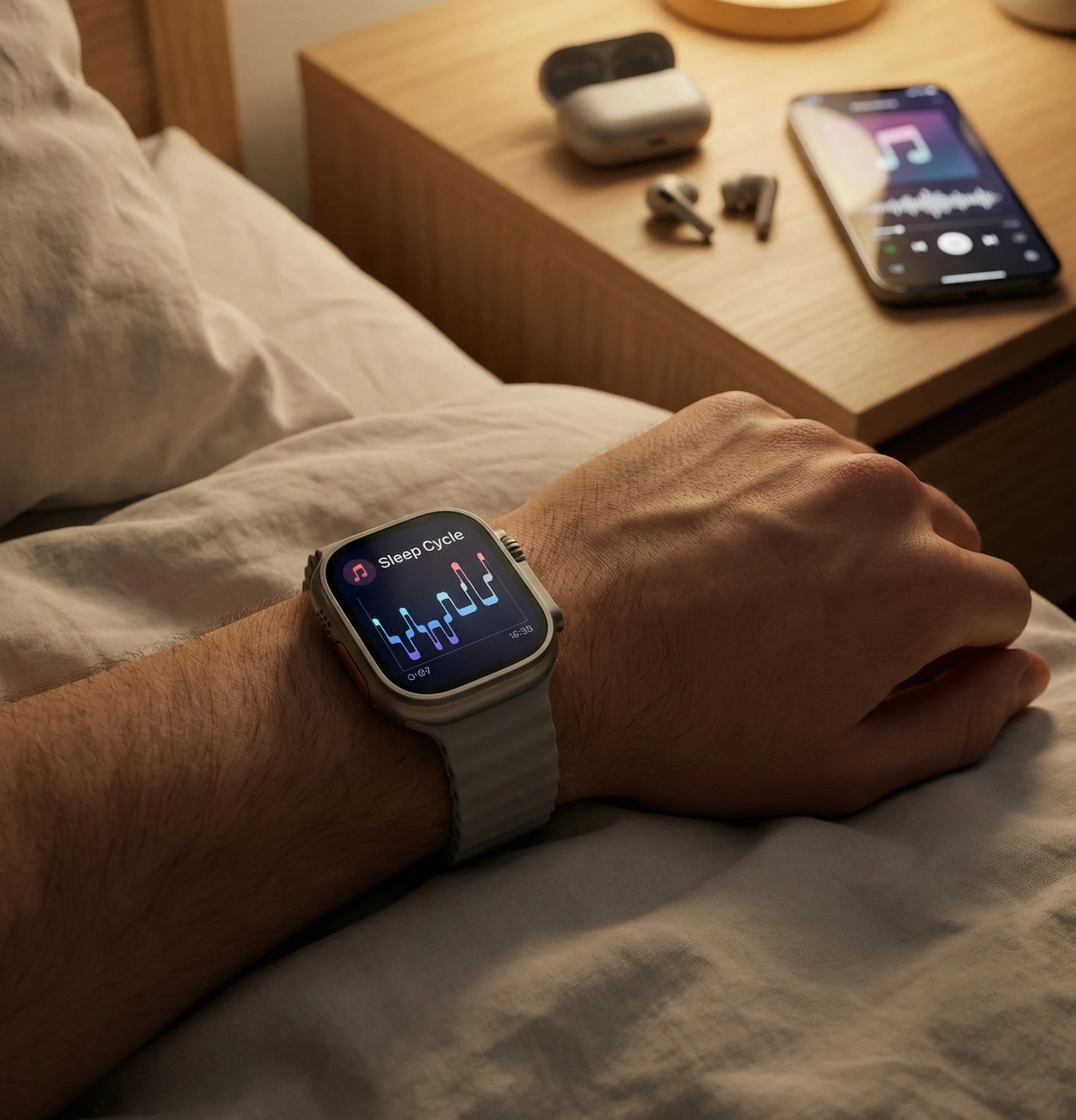
Wearable devices are bridging the gap between technology and restful nights by merging sleep tracking with personalized music experiences. This combo aims to enhance sleep quality while catering to individual needs.
Some wearables come with built-in music capabilities, letting you stream calming tracks or create customized bedtime playlists. These devices often sync with music apps, offering a seamless way to play tunes that help you relax into dreamland. You could think of it as your personal DJ specializing in sleep-inducing beats.
Smart alarms are another neat feature. By syncing your wake-up time with your sleep cycle, these alarms play gentle music at the optimal moment during your lightest sleep phase. The goal? Waking up feeling a bit more refreshed, without the jarring ringing of a traditional alarm clock.
Biometric data collected by wearables plays a key role in this integration. The device can track your heart rate and movement patterns to tailor the music experience, offering personalized recommendations based on your unique sleep metrics. This customization can be especially helpful for those who struggle with sleep consistency.
Of course, there are some challenges with making all this tech work smoothly together. Compatibility issues between devices and streaming services can arise, and there’s the perennial concern of managing multiple apps and settings just to fall asleep. But with wearables evolving rapidly, these hiccups are likely to get ironed out as the tech advances.
Future of Wearable Devices in Sleep Monitoring and Music Therapy
Wearable technology is making exciting strides in sleep monitoring and music therapy, and the future looks promising. Innovations in this field are focused on improving accuracy, user experience, and integrating more personalized features.
Emerging technologies are expanding what wearables can do. Expect to see more advanced sensors and algorithms that provide even clearer insights into your sleep patterns. This technology will likely evolve into more compact and comfortable devices, enhancing usability and ensuring more people can benefit from them without feeling encumbered during sleep.
Music therapy is set to move beyond simple playlists. Researchers and tech developers are exploring how algorithms might generate music in real-time, based on your biometric feedback, to create a truly bespoke audio experience for relaxation and sleep. This would allow for a more responsive and adaptive way to use music as a therapeutic tool.
This convergence of tech and therapy has the potential to significantly impact healthcare and sleep research. Better data collection and analysis can lead to breakthroughs in how we understand and treat sleep disorders. Plus, with more people benefitting from improved sleep and lowered stress, the overall impact on public health could be substantial.
However, the rise of such technology brings up questions about data privacy. As wearables collect more and more personal information, ensuring that this data remains secure and is used ethically is crucial. Users will need clear guidelines and control over how their data is used and shared to maintain trust in these innovative solutions.
“I trust this article provided valuable insight. Share your thoughts or questions in the comments below”