
Getting good sleep ain’t just about crashing for the night. It’s nourishing your body and mind, fueling them up for challenges ahead. When sleep’s off, everything gets cranky, right? This is where meditation steps in as a game changer. It’s like that magic potion for easing into restful slumber.
Meditation is like your secret weapon for better sleep. It’s got this knack for calming the mind and body, creating a peaceful gateway to dreams. Quiet your racing thoughts, release daily tensions, and you’re setting the stage for quality snooze time.
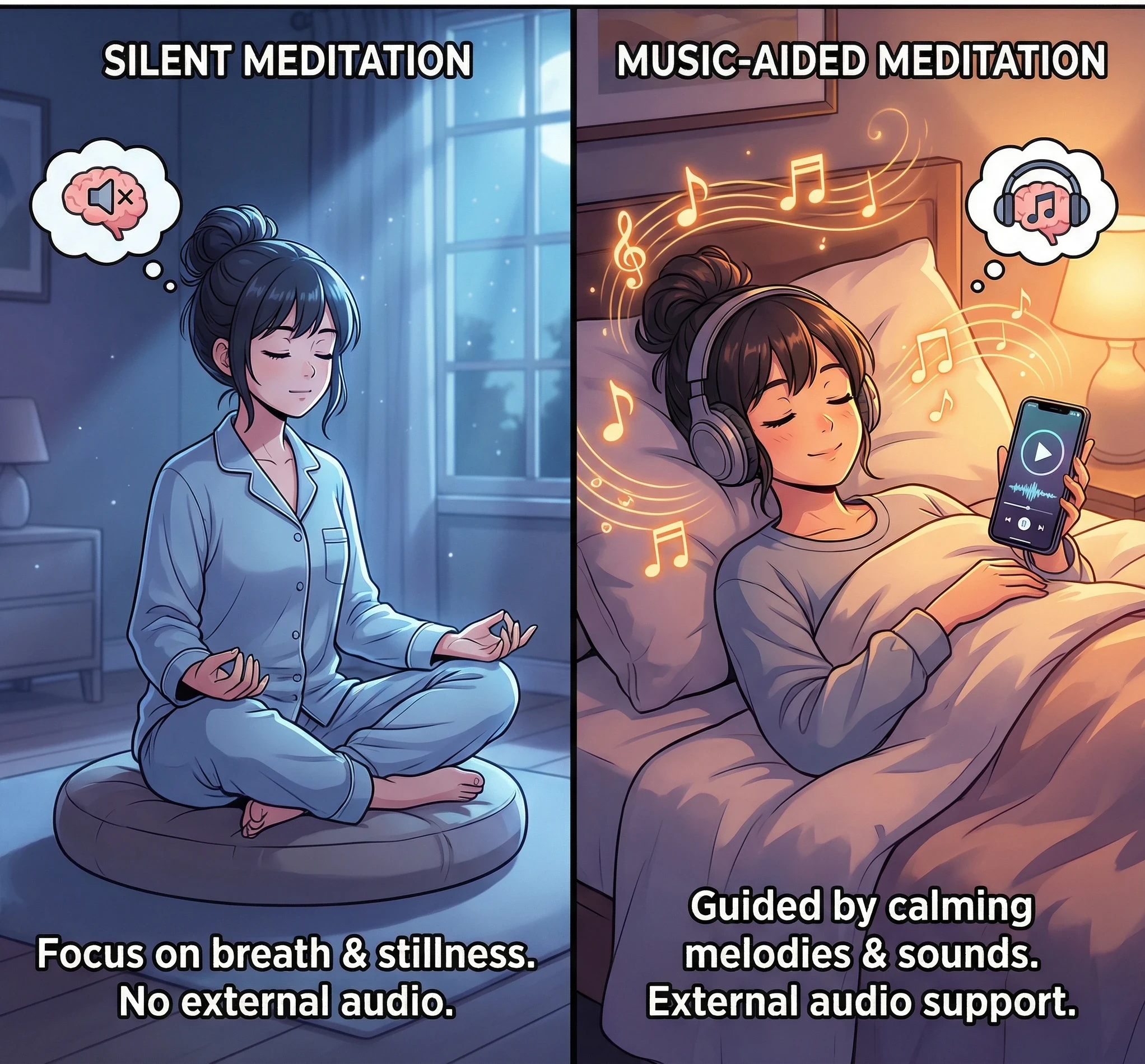
People have been turning to meditation for ages, and it’s not just hype. There’s silent meditation, where it’s all about stillness and focusing within. Then, there’s music-aided meditation, helping some find their rhythm with sound. Each style has its unique charm, catering to different needs and preferences.
At the heart of this practice are tranquility and focus. Ultimately, it’s all about gently steering your mind away from the day’s chaos and towards deep relaxation. It ain’t about forcing anything, but rather, letting that natural calm unfold.
Exploring Silent Meditation Techniques
Silent meditation is like finding that perfect quiet spot in a bustling cafe—time to switch off the outside noise. It’s about going inward, tapping into that inner calm we all crave, especially when counting sheep just ain’t cutting it.
When you dive into silent meditation, start with breathing. No fancy tools needed; just you and some deep breaths. Try mindful breathing—slow inhales and exhales that clear the mental chatter. Or go for progressive relaxation, where you focus on each body part melting into relaxation.
People who’ve tried silent meditation often talk about its powerful effects. Some say it’s like hitting the reset button on their thoughts, helping them drift off easy. It’s personal, but those who’ve gotten their groove with silent meditation swear by the tranquility it brings.
It’s not always a breeze, though. Silent meditation can bring up challenges, like grappling with those pesky intrusive thoughts that refuse to go away. Staying focused without external cues can feel tough at first. But with practice, patience, and persistence, silence becomes the canvas for a peaceful sleep.
The Role of Music in Meditation and Sleep
Music transforms meditation into an immersive journey, like having a soothing soundtrack playing as you wind down. It’s like the gentle nudge that guides you into relaxation, making it easier to leave the day’s worries behind.
Choosing the right music is key. It’s not just any playlist, but one that resonates with calmness. Soundscapes with nature sounds or gentle melodies work wonders. Some folks find ambient music or calming instrumentals hit the sweet spot for winding down.
Take those soothing frequencies; they’ve got real science backing them. Binaural beats, for instance, sync your brainwaves to the calming tunes, paving the way to deep relaxation and better sleep. There are cases where people found relief from stress and anxiety through music-aided meditation, improving their sleep patterns significantly.
Music also brings up the personal touch. We all got different vibes, so what relaxes one person might not for another. Noise sensitivity and emotional response to music can vary widely. It’s about experimenting with different tunes until you find what calms your inner storm.
Making the Right Choice: Silent vs. Music-Aided Meditation
Choosing between silent and music-aided meditation for sleep isn’t one-size-fits-all. It’s more about tuning into what calms your mind best. Some find silence creates the perfect conditions for relaxation, while others thrive on soothing melodies to set the sleep stage.
Silent meditation, with its focus on internal stillness, is great if you love the idea of a deeply personal and introspective experience. It requires a bit more discipline to shut out the buzz of everyday thoughts, but once mastered, it’s like finding pure serenity.
On the flip side, music-aided meditation can feel like being gently guided into a peaceful state. The right tracks make it easier for those who struggle to shut out mental chatter on their own. It can enhance the meditative experience, creating a sensory oasis in your own head.
When picking your path, think about what helps you unwind at the end of the day. Previous meditation experience, personal comfort, and specific sleep goals might influence your choice. If possible, give both styles a try. Mix and match to see what feels right.
Incorporating meditation into a nightly routine doesn’t need to be complicated. Start small, maybe just a few minutes before bedtime. Over time, you’ll find your rhythm and know whether silence or sound is your ticket to dreamland.
Remember, meditation is a personal journey. It’s about listening to what your mind and body need to drift into restful sleep, so customize it to make it work for you.
“You now have everything you need to get started—feel free to ask questions or share your perspective in the comments.”