
Tai Chi might look like a series of slow, graceful movements, but it’s actually an ancient Chinese practice rooted in martial arts and philosophy. It’s about achieving harmony between mind and body through mindful movement and controlled breathing. The philosophy behind Tai Chi focuses on balance, both physically and mentally, aiming to promote peace and stability.
This practice isn’t just about moving slowly; it’s about the benefits that come from doing so. Essential benefits include improved balance, flexibility, and strength. It’s also shown to reduce stress and anxiety, mainly due to its meditative nature. And for those of us worried about what’s happening inside our bodies, Tai Chi has been known to lower blood pressure and improve heart health.
You might be wondering, “What specific illnesses does Tai Chi help with?” The list is pretty impressive. It aids people dealing with chronic conditions like arthritis by enhancing mobility and reducing pain. It’s also fantastic for conditions like hypertension and for overall cardiovascular health. Even mental health gets a boost, with studies showing positive effects on anxiety and depression.
Real-life stories show just how transformative Tai Chi can be. People from all walks of life share their journeys of healing and strength, often describing it as a game-changer for their physical and mental health. These personal accounts highlight how Tai Chi isn’t just exercise – it’s a path to a healthier, happier life.
The Science Behind Tai Chi And Sleep
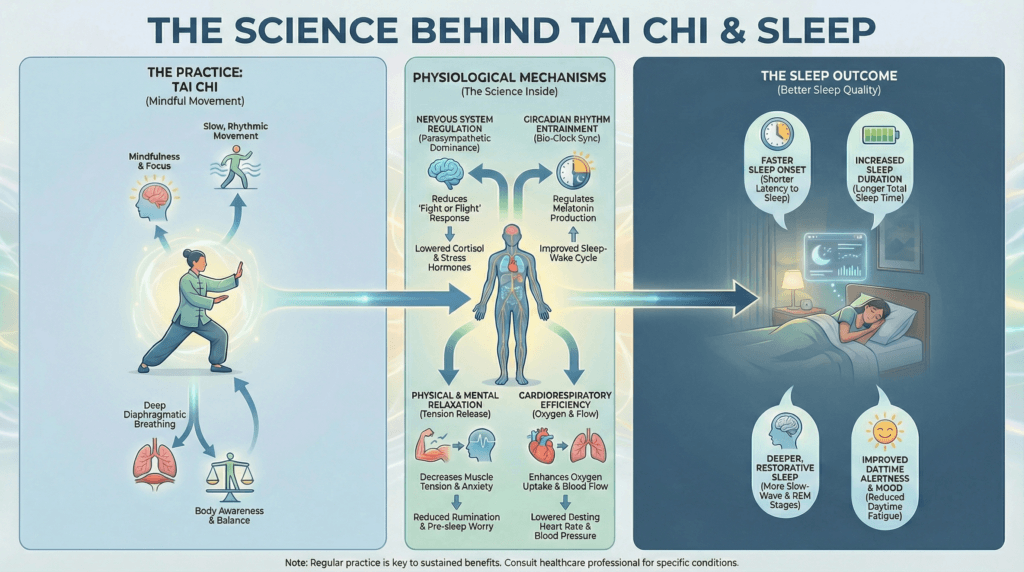
Improving sleep isn’t just about turning off the lights and hoping for the best. The connection between Tai Chi and better sleep is fascinating. Research shows that Tai Chi can significantly enhance sleep quality. People report falling asleep quicker and feeling more rested in the morning, all thanks to those slow, mindful movements.
Scientific studies support these claims, pointing to Tai Chi as a natural way to combat insomnia and other sleep disorders. Researchers suggest the practice improves slow-wave sleep, which is crucial for feeling refreshed. It’s not only about how long you sleep but how deeply you rest.
On top of that, engaging in relaxation and meditation components of Tai Chi releases tension and anxiety. This helps calm your mind and body, making it easier to drift off into a peaceful slumber. It’s like giving your brain a natural sleep aid without popping a pill.
Sleep specialists have shared their insights, too. They often note that practices like Tai Chi activate the parasympathetic nervous system, which is responsible for rest and digestion. This activation prompts the body to ‘power down,’ preparing it for quality sleep. So, if you’re struggling to catch some zzz’s, Tai Chi could be your ticket to a dreamier night.
Harmonizing Tai Chi With Music: Embracing Flow
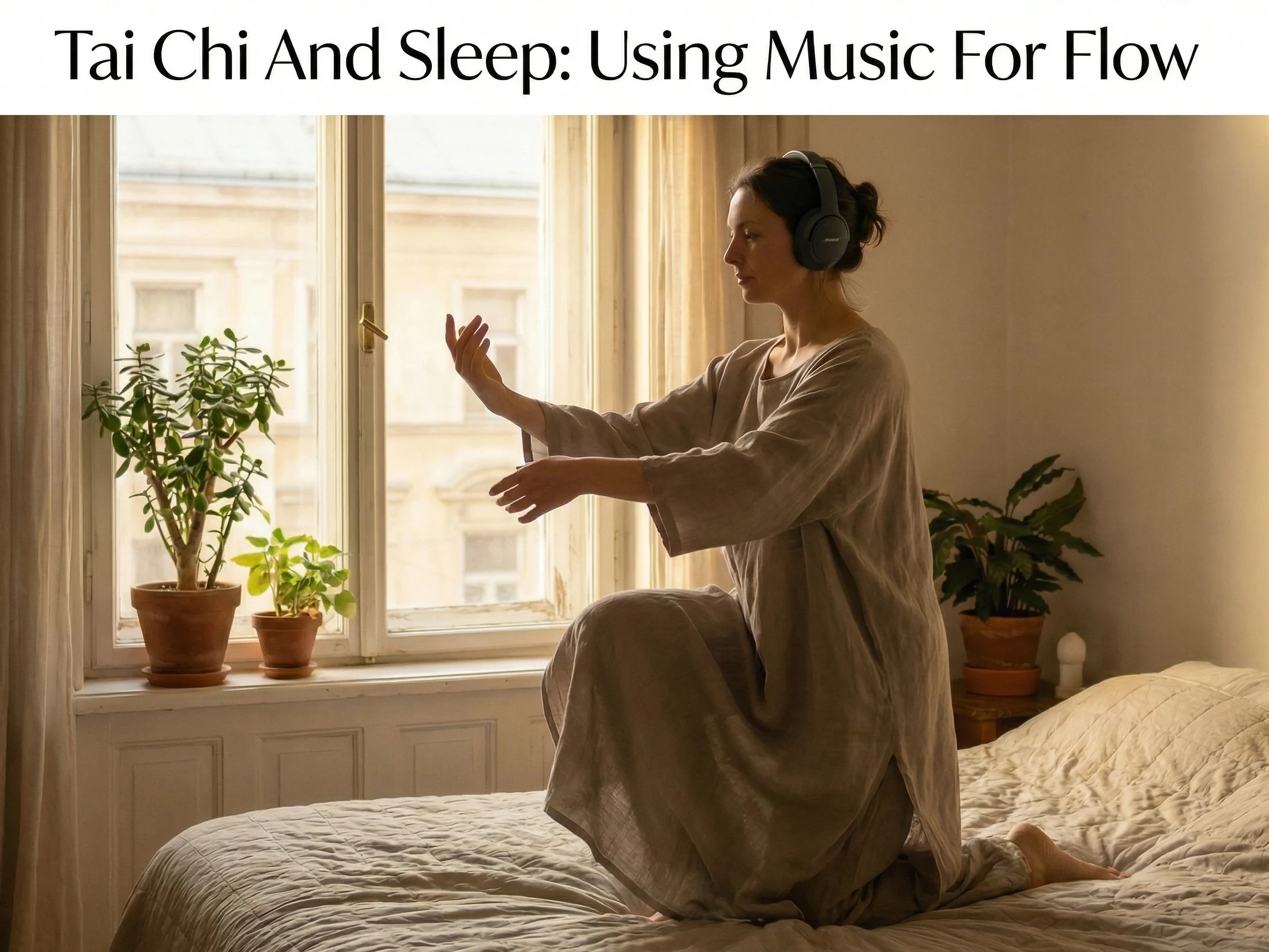
Music can take your Tai Chi practice to the next level, introducing an element of flow that enhances both movement and mindset. Pairing music with Tai Chi creates a more profound, immersive experience, making each session feel special and unique.
Choosing the right tunes isn’t just about what you like; it’s about finding music that complements your Tai Chi rhythm. Think calming and soothing melodies—instrumentals or nature sounds usually work best. The idea is to create an atmosphere that helps you sink deeper into mindfulness and ease.
The rhythm of music can guide your movements, encourage relaxation, and clear mental clutter, letting you connect more deeply with the present moment. This heightened state of focus can lead to mental clarity—a big plus if you’re also aiming for better sleep or reduced stress.
Practitioners who’ve embraced the music-enhanced approach often report feeling more engaged and energized, yet surprisingly relaxed after their sessions. They’ve found that the right soundtrack makes it easier to let go of distractions and truly embrace the Tai Chi journey. So, grab your headphones and let the music flow with your moves.
Integrating Tai Chi Into Your Daily Routine For Better Sleep
Getting Tai Chi into your daily routine is like setting the stage for better sleep, one flowy movement at a time. Personalized routines are key. Tailoring practices to fit your needs can make a world of difference, whether targeting stress or improving sleep hygiene.
Beginners might feel a bit wobbly at first, but it’s all about starting slow and maintaining consistency. Short, regular sessions can work wonders over time. Giving yourself the grace to learn and grow into the practice is where the magic happens.
Think of Tai Chi as your natural sleep ally. Its calming effects can set the tone for winding down at bedtime, helping you shift from daytime rush to nighttime hush. But keep expectations realistic—while Tai Chi has fantastic benefits, it’s not an instant fix. Consistency is where the sleepy-time magic unfolds.
Hitting roadblocks is normal, and many practitioners have shared nuggets of wisdom on pushing through those hurdles. Making room for Tai Chi, even in a busy schedule, might require some tricks, like dedicating a regular time slot or finding a Tai Chi buddy for accountability. Keeping it light and fun ensures you stick with it and reaps the sleep rewards.