
Visualization isn’t just for daydreamers or starry-eyed meditators. It’s a powerful tool that can help enhance the quality of your sleep and set the stage for better relaxation when you’re winding down at night. By engaging your mind with focused imagery, you can channel unwanted stress into something way more positive and beneficial.
Dreaming is a fascinating part of sleep that involves visual imagery. Technically speaking, during Rapid Eye Movement (REM) sleep, your brain is super active. It’s like a turbo-charged dream factory. Visual imagery taps into this natural process, allowing you to shape your dreamscape with intentions that foster calmness and relaxation.
Incorporating visualization into your bedtime routine can be as simple as focusing on serene images or scenarios that bring you joy and calmness. Maybe it’s imagining the gentle sway of a hammock under a cool summer breeze or picturing yourself floating effortlessly in a serene ocean. Whatever speaks to your peace, latch onto that image as you drift into sleep.
Improving visualization skills takes a bit of practice, but it’s totally worth it. Start by spending a few minutes visualizing your chosen scenario each night as part of your routine. As you get more comfortable, the images in your mind will become clearer and evoke stronger feelings of tranquility. Before you know it, visualizing while you’re unwinding will become second nature.
Imagery Techniques For Optimum Relaxation
Visual imagery techniques can be a game-changer when it comes to relaxation. These methods involve creating mental images that promote a sense of calm and tranquility. By actively engaging your mind, you direct your thoughts away from stress.
Visual imagery is all about using mental pictures to affect emotional and physical responses. Some popular methods include focusing on serene landscapes, like a peaceful meadow or a quiet beach. It’s about finding images that truly resonate with your sense of peace.
When you commit to a visualization method, make sure it’s something you can easily return to night after night. Spending just a few moments each day imagining a relaxing setting can have profound effects on your ability to unwind.
There’s something magical about pairing visualization with soothing sounds, too. Using calming music or nature sounds alongside your mental imagery can deepen the relaxation experience, making the whole process even more immersive and effective.
By practicing these imagery techniques, you’re equipping yourself with powerful tools to combat stress and anxiety, creating a more restful sleep environment.
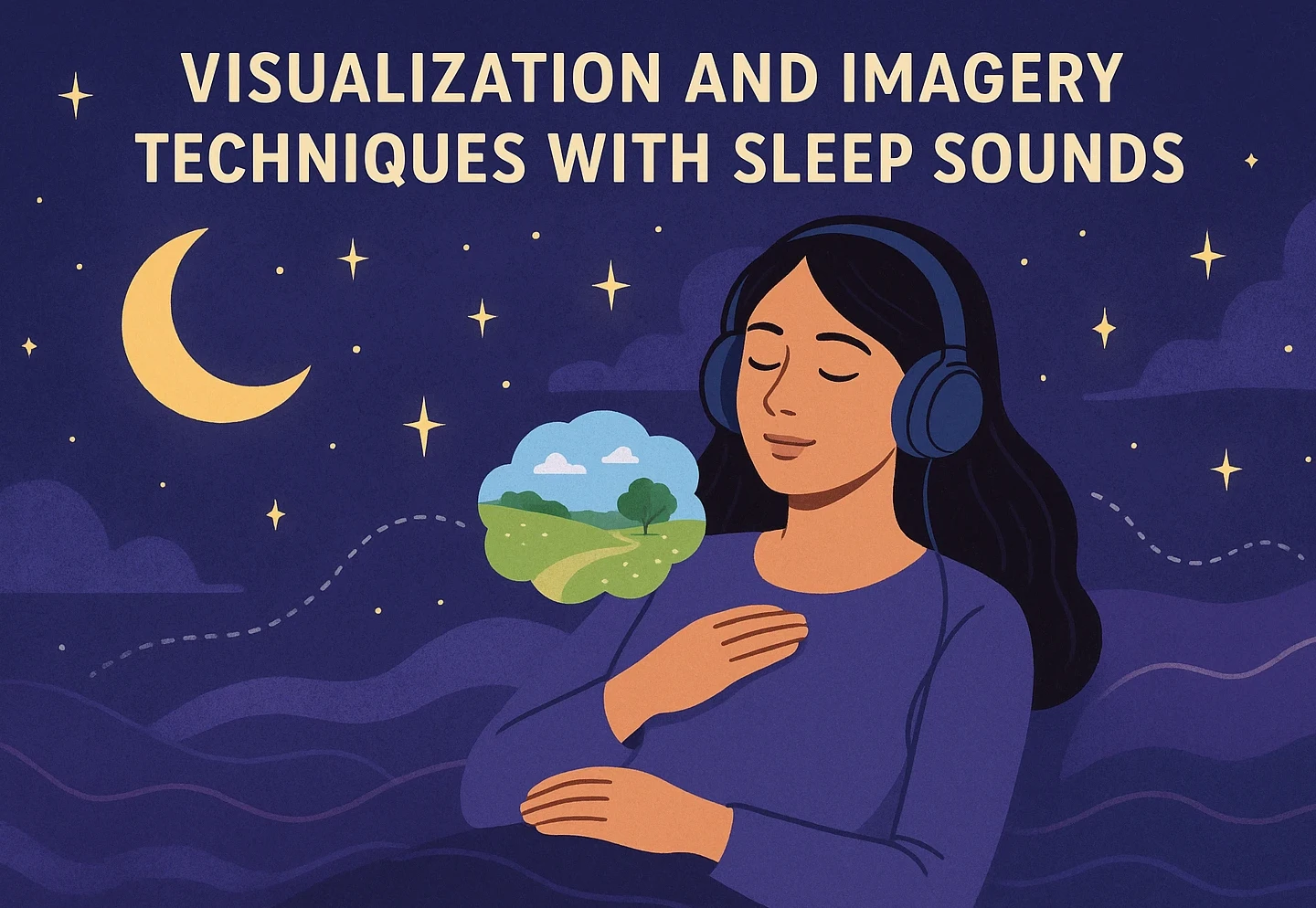
Guided Imagery and the 3:2:1 Rule for Better Sleep
Guided imagery is like having a friendly escort into a world of calm. It uses a narrative or a series of instructions to help you picture peaceful scenes in your mind. Often led by a recording or a soft voice (yep, that can even be yours), it directs your imagination toward relaxing spaces.
So how do you make guided imagery your nightly thing? Begin by settling into a comfy spot in bed, closing your eyes, and listening to a guided script. This could start with something like imagining yourself in a lush forest or by a tranquil lake. Focus on all your senses: the scent of pine, the sound of rustling leaves, or the coolness of a gentle breeze.
Pairing this with the 3:2:1 technique amplifies its effect. Here’s how it works: three hours before bed, stop eating; two hours before, finish any tasks or errands; and one hour before, shut down screens and let yourself relax. This routine signals your body to let go of the day.
Combining guided imagery and the 3:2:1 rule not only prepares your mind for rest but also sets up a healthier bedtime routine. Adding sleep sounds can further enhance this experience, making sleep sweet and restorative.
Exploring the 369 Method for Enhancing Sleep Quality
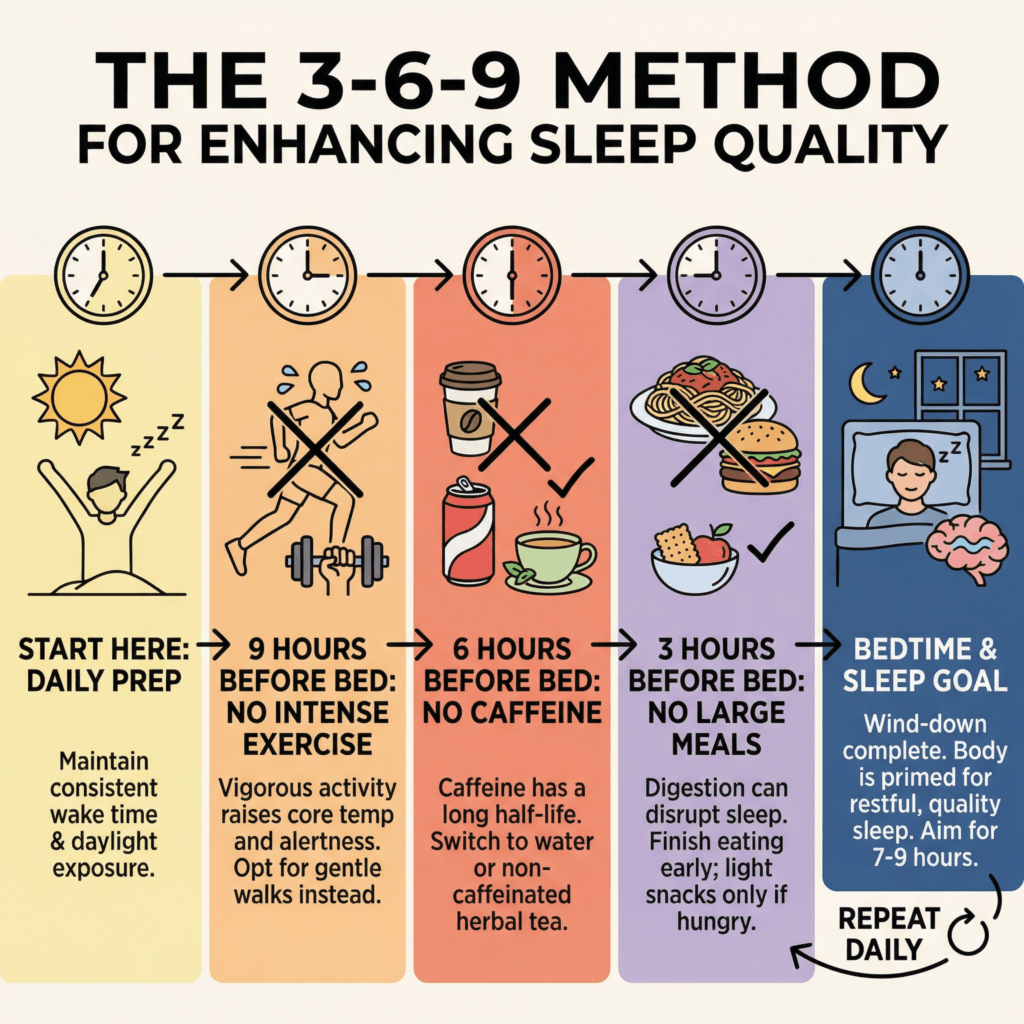
The 369 Method is gaining popularity as a tool to enhance sleep quality, and it’s surprisingly simple to get into. This technique involves repeating a short affirmation three times in the morning, six times during the day, and nine times before bedtime. The idea is to program your mind with positive thoughts and intentions.
Imagine setting up your sleep environment by focusing on a calming affirmation like ‘I am relaxed and ready for a peaceful night.’ Repeating this affirmation through the day not only grounds your mindset but primes your brain for restorative sleep once night falls.
When you’re ready to try the 369 Method, think of affirmations that resonate with your sleep goals. Maintain consistency, and let these thoughts guide you through your wind-down routine. It’s amazing how much impact your mindset can have on your ability to relax and drift off.
Integrating this method with visualization and soothing sleep sounds can maximize its effect. Imagine your ideal sleep environment, whether it’s the sound of rain or ocean waves. Using these elements helps you create a cocoon of calm, paving the way for high-quality sleep.
- “This article was designed to support your success. Add your thoughts or questions in the comments—I’m here to help.”