
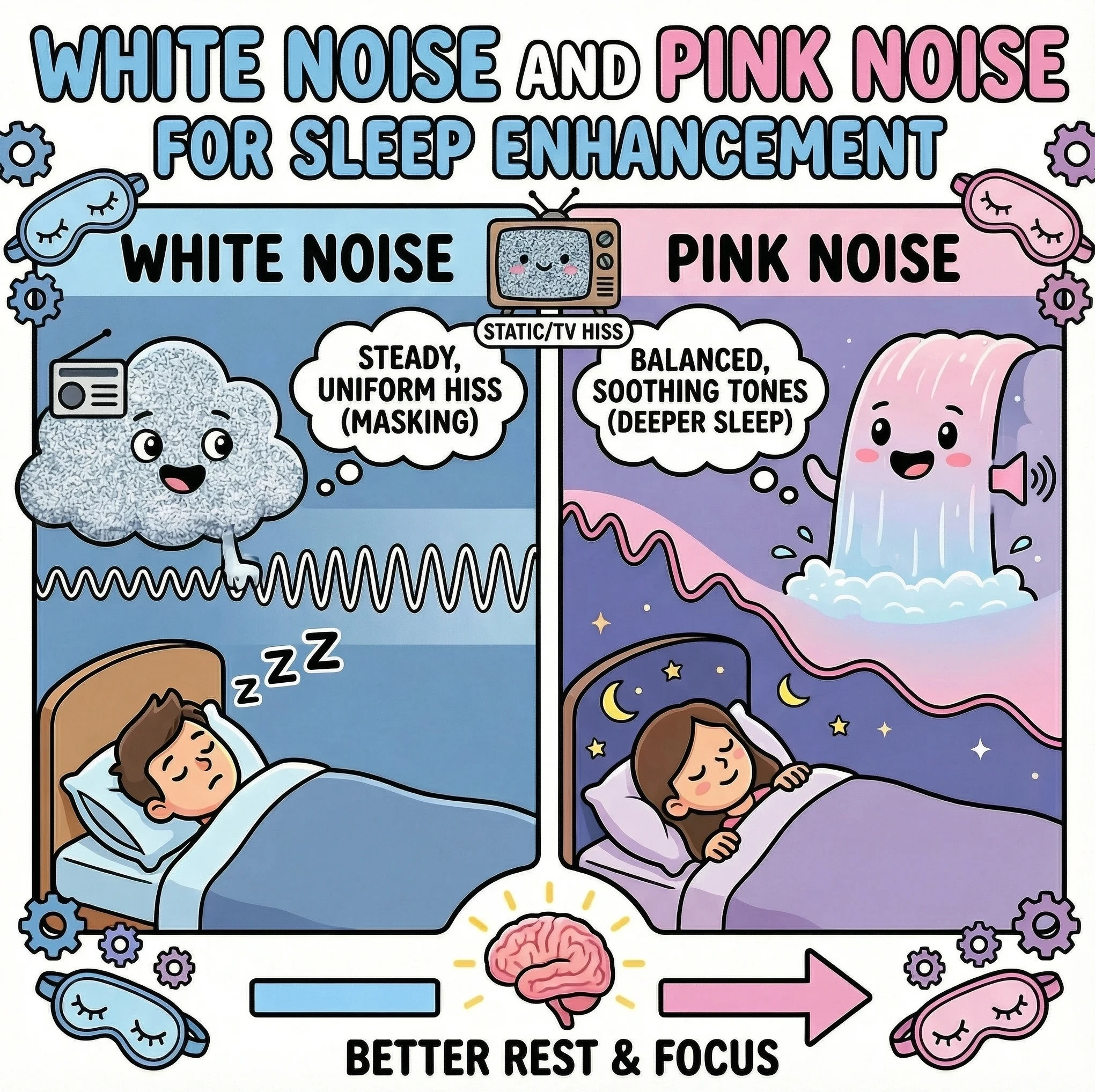
White noise and pink noise might sound like the name of some indie bands, but they actually relate to types of sound that can help with sleep. White noise is a consistent sound covering all frequencies that humans can hear, kinda like that ‘shh’ sound you make to calm a baby. It levels the playing field by drowning out sudden noises like your neighbor’s late-night TV sessions.
On the other hand, pink noise is a bit more relaxed and friendly on the ears. It’s like white noise’s chill cousin, with frequencies that make natural sounds — think of rustling leaves or calming waves. While each type of noise plays with sound frequencies differently, they both aim to create a steady auditory backdrop.
Behind the science of these sounds lies the concept of noise colors, just like colors in light. White noise, covering all frequencies equally, tends to sound a bit hissy. Pink noise decreases the energy of the high frequencies, making it pleasantly softer and less intrusive, which is probably why it feels a bit easier on the senses when you’re drifting off to dreamland.
Besides white and pink noise, there are other sound contenders like brown noise and blue noise. Brown noise has a deeper, bass-heavy vibe that some find soothing, like distant thunder. Meanwhile, blue noise boosts the high frequencies and skips the lower ones, which makes it less popular for sleeping since it tends to be a bit too sharp and intense. Understanding these differences helps in finding what truly vibes with your sleep needs.
Choosing Between White Noise and Pink Noise for Better Sleep
Deciding whether white noise or pink noise will give you a better night’s sleep can feel a bit like picking your favorite ice cream flavor—it’s all about personal preference and what hits the spot for you. So, how do these sonic sleep aids actually work? Well, it’s all about how they interact with your brain.
White noise does an excellent job at masking background disturbances. Imagine it as a gentle sound blanket that drowns out things like barking dogs or traffic. This makes it a popular choice if your main goal is to block out disruptive noises.
Pink noise, however, mixes things up a bit. It’s all about enhancing those sleep cycles. Studies suggest it might stabilize brain activity during sleep, which can lead to improved quality of zzz’s and deeper rest. It’s like having a spa day for your brain while you snooze.
Experts will tell you there isn’t a one-size-fits-all solution here—choosing between white and pink noise depends on what your brain responds to. Some sleepers swear by the uniform consistency of white noise, while others can’t get enough of that mellow pink noise vibe. Testing both might help you discover your personal sleep soundtrack.
Health Implications of Sleeping with Noise
Curious about whether it’s cool to sleep with pink noise? Let’s break it down. Studies generally suggest that using pink noise at night is quite healthy, especially since it can improve sleep quality and help you stay in dreamland longer. It’s about creating an environment where your brain can relax and rejuvenate.
When it comes to white noise, the story’s pretty similar. A lot of folks rely on white noise every night to hush those pesky background sounds. The general consensus among sleep experts is that its long-term use doesn’t pose any serious health risks, as long as you’re comfortable with it and it’s not turned up too loud.
Leaving pink noise on all night? Yep, that’s usually OK too. Consistent sound can minimize disruptions, letting you float in the deep corners of sleep without sudden awakenings. However, moderation is key, and you should ensure the sound isn’t so loud that it harms your hearing or causes stress.
What if concerns crop up about using these sounds for sleep every single night? Honestly, everyone’s different. It’s crucial to listen to your body and see how it responds over time. If you’re waking up more rested and refreshed, you’re likely on the right track. However, if you notice any hearing difficulties or feel more stressed, it’s a cue to reassess your noise levels.
The Impact of Sound Waves on the Brain and Sleep Quality
Pink noise has a particularly intriguing way of working magic on the brain during sleep. By gently affecting brain wave activity, it’s been shown to enhance deep sleep, which is the most restorative sleep phase. You know, that deliciously restful state where the body heals and the mind recharges.
Consistent exposure to sound waves like pink noise might not only boost sleep quality but could also have some nifty cognitive benefits. It’s like giving your brain a gentle massage, helping with memory possibly and even attention span.
Personal experiences paint a colorful tapestry of benefits. Many people report waking up more refreshed and alert after a night with their preferred noise setting. It’s like having a trusty sleep buddy that keeps night-time disturbances at bay, making the morning feel a bit brighter.
Want to make noise a part of your nightly ritual? Start with finding the volume and sound type that suits your fancy, ensuring it’s not too overwhelming. Consider experimenting with different noises or even blending them until you hit the sweet spot. Happy snoozing!
“This article was designed to support your success. Add your thoughts or questions in the comments—I’m here to help.”